

 English
 русский
 عربى
 Deutsch
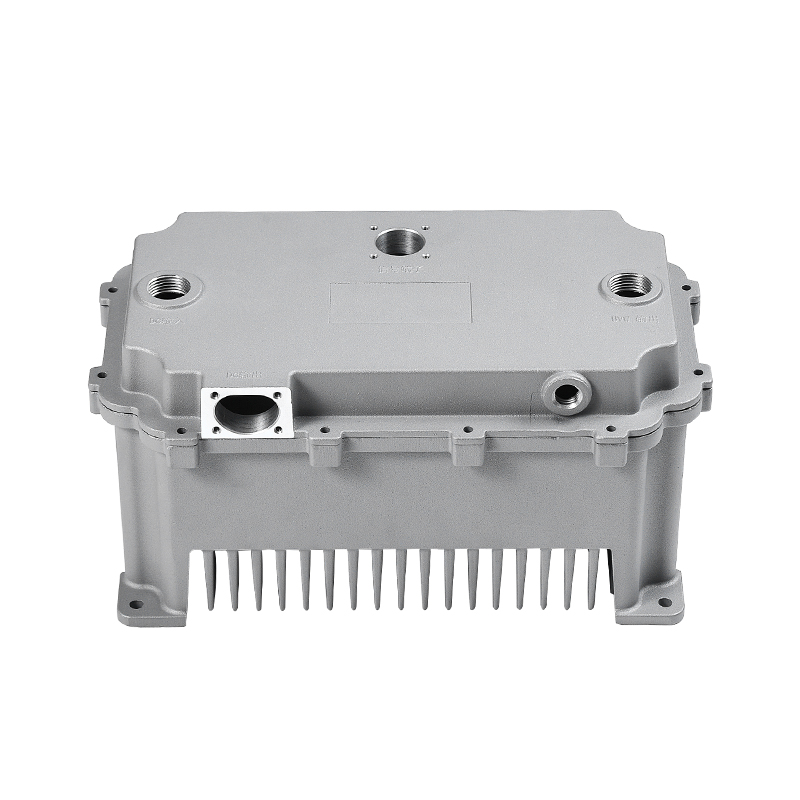
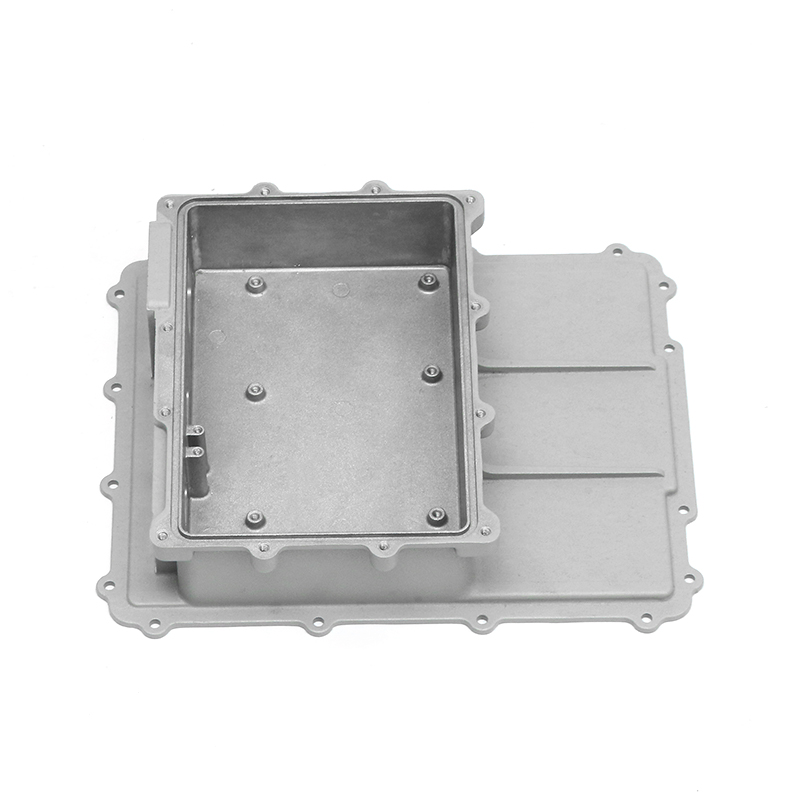
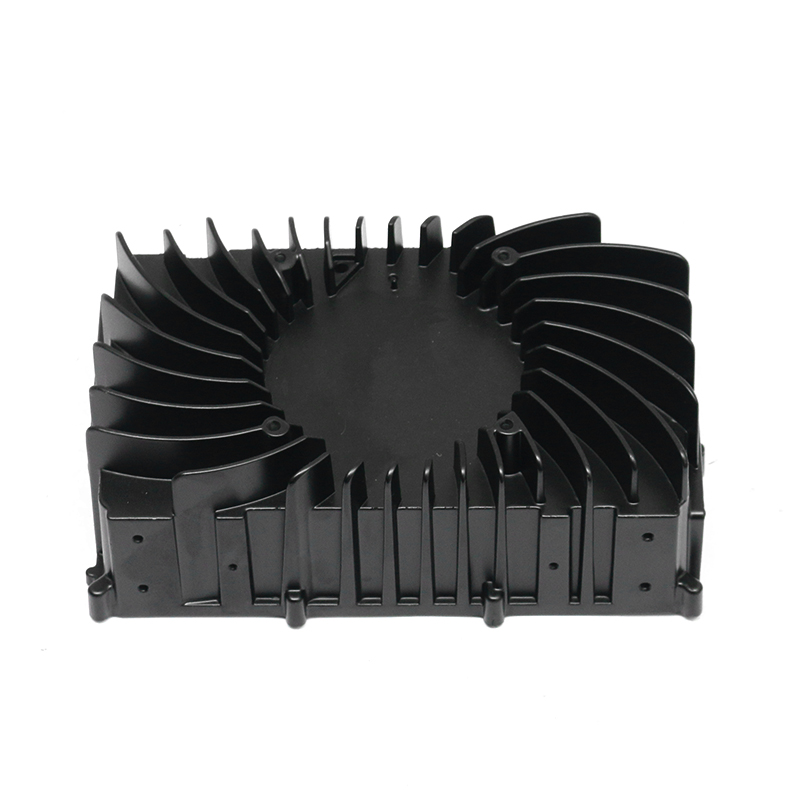
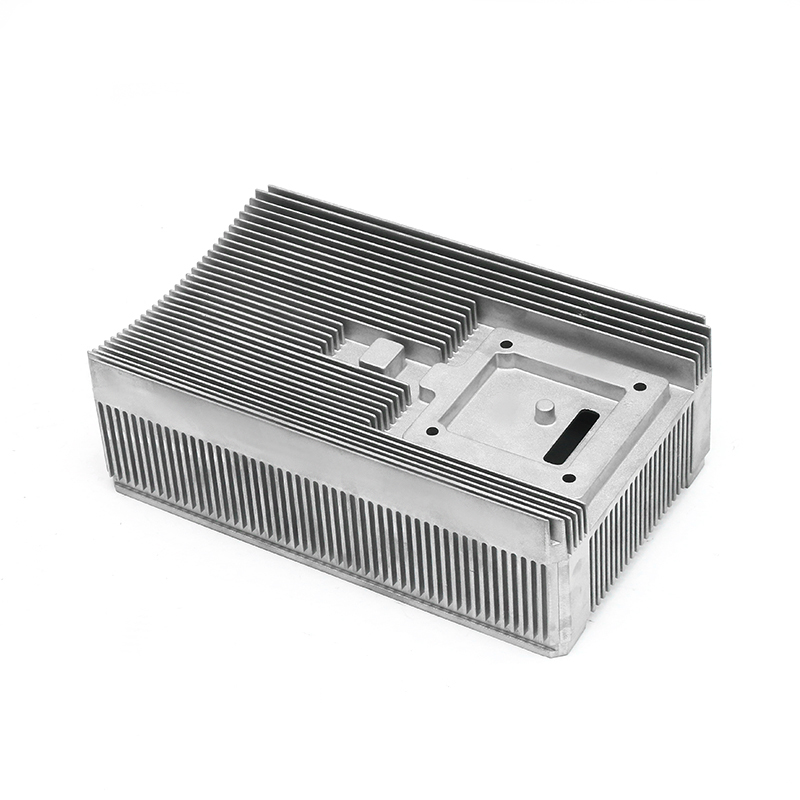
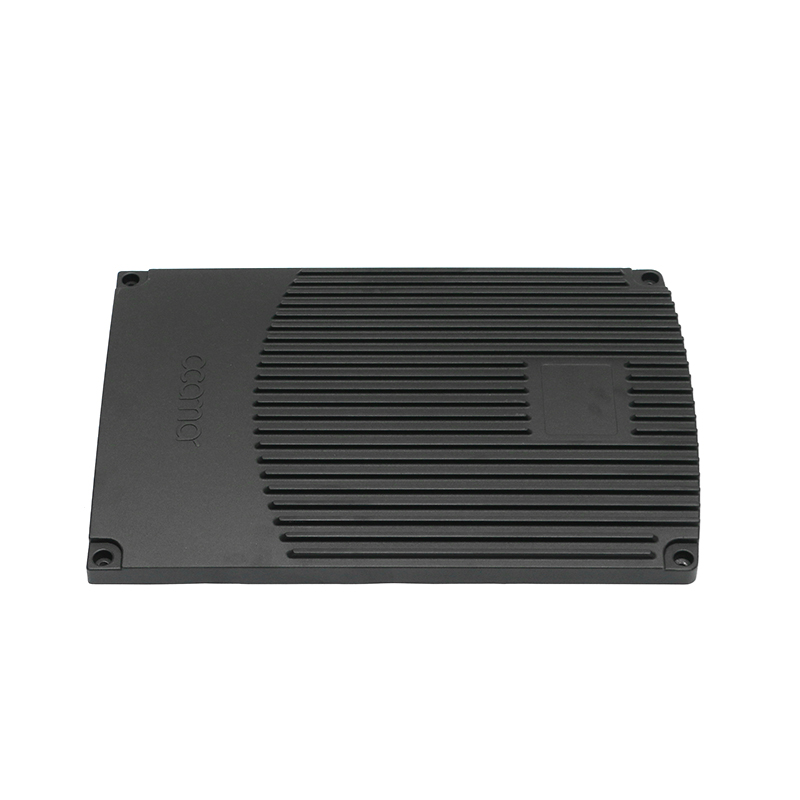
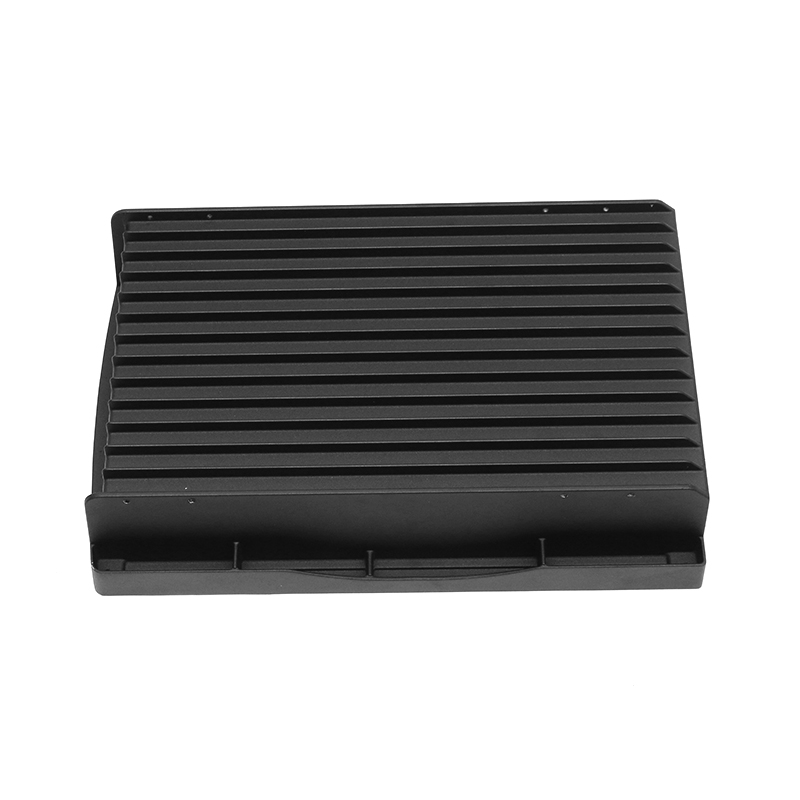
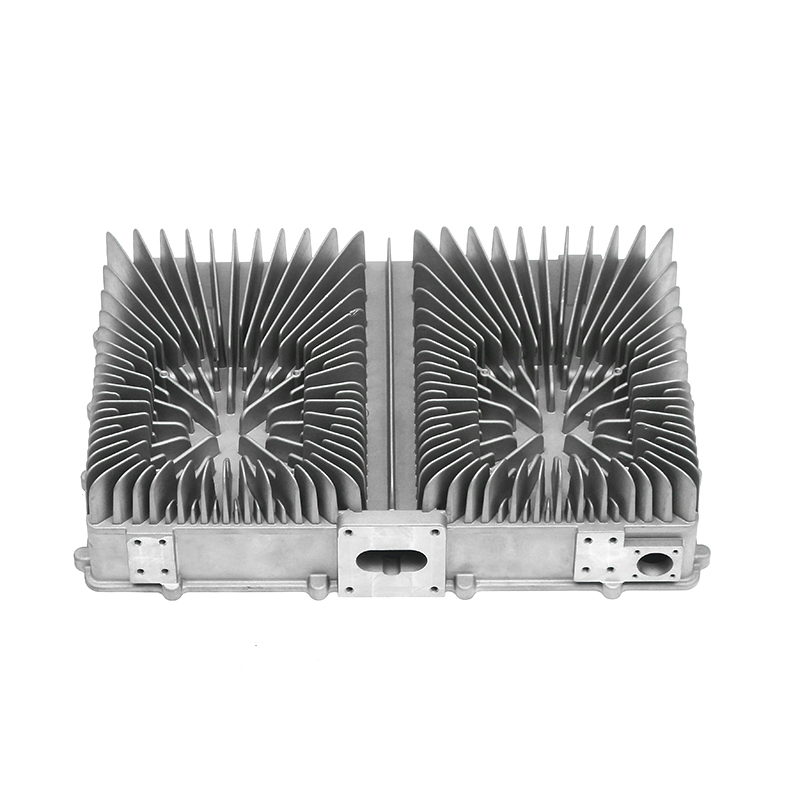
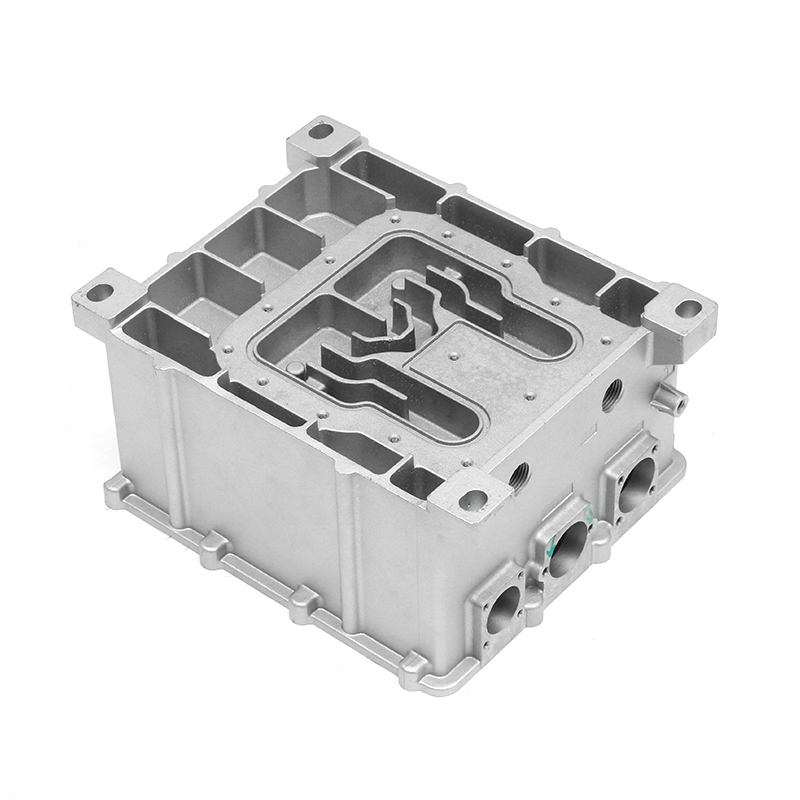
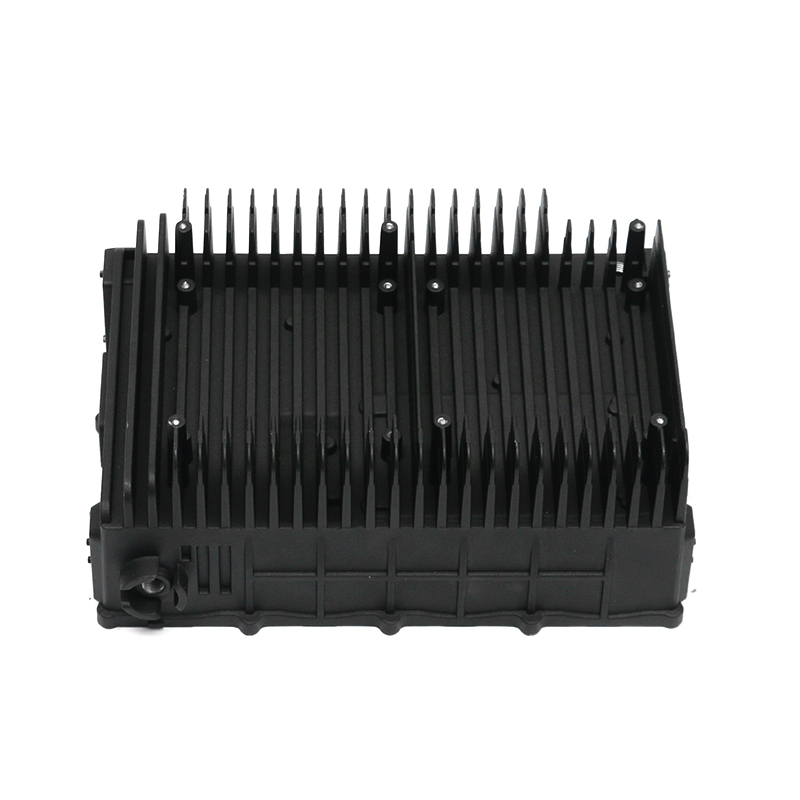
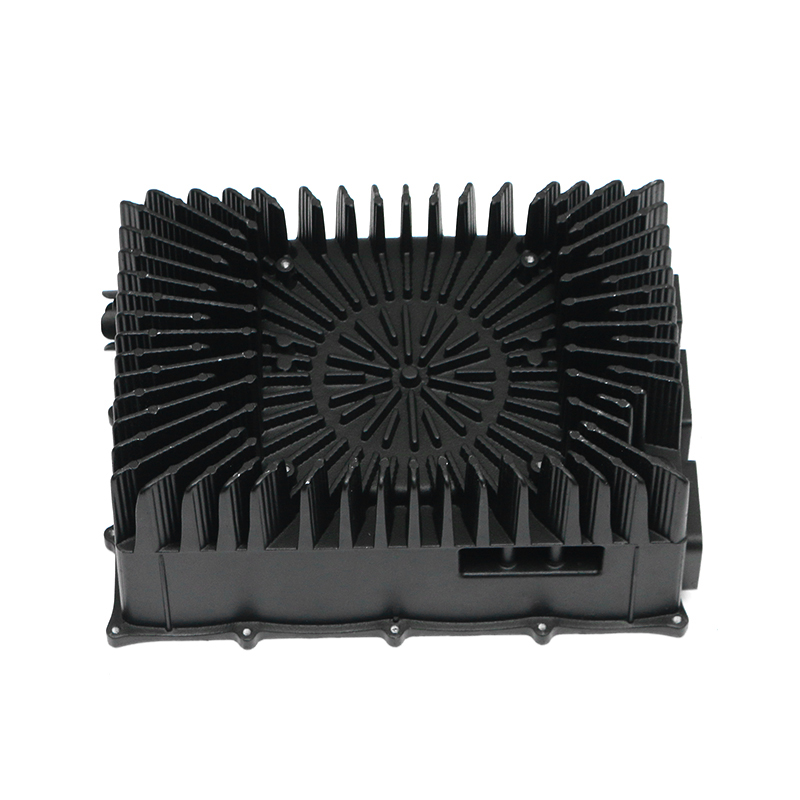
A vehicle electric control box housing looks like a simple aluminum enclosure, but it actually sits at the intersection of mechanical, thermal, and electrical engineering. The power electronics inside it generate hundreds of watts of heat and must survive road vibration, water spray, salt, and ambient temperatures from -40°C to 105°C. A poorly designed housing shows up later as thermal derating, moisture in the connector cavity, or cracks around mounting bosses—failures that are expensive to trace after a vehicle reaches the road.
The practical conclusion is straightforward: the alloy, cooling architecture, and casting quality decide how the electronics inside perform and how long the system lasts. Engineers and buyers who understand these variables can evaluate suppliers faster and avoid late-stage redesigns.
What a Vehicle Electric Control Box Housing Must Do
A control box housing has five simultaneous duties.
- Mechanical protection and mounting — the housing carries the weight of power boards and busbars, transfers road vibration to the vehicle structure, and must keep resonant frequencies above the dominant excitation range.
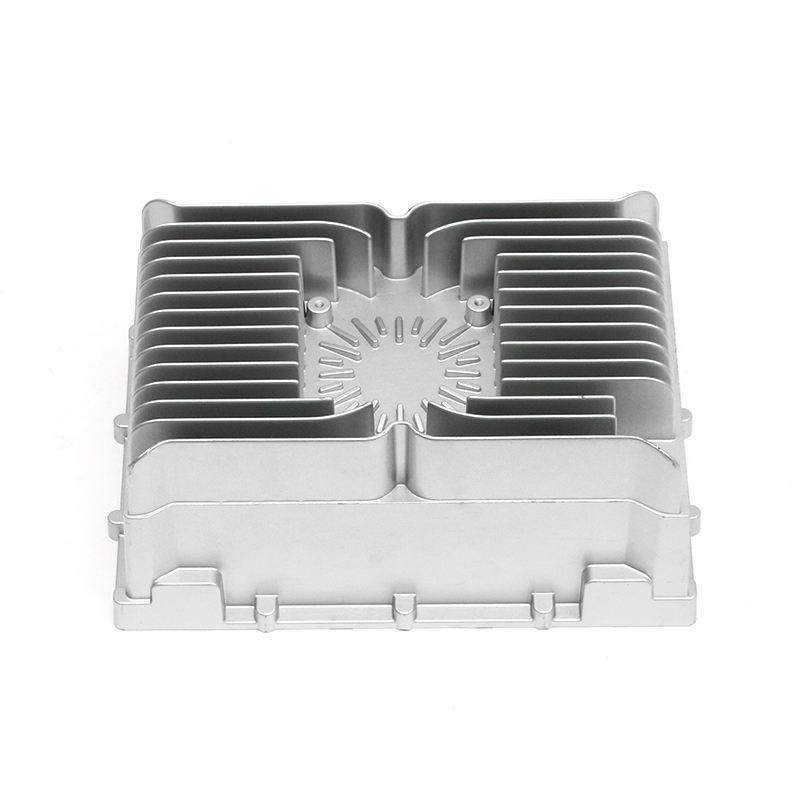
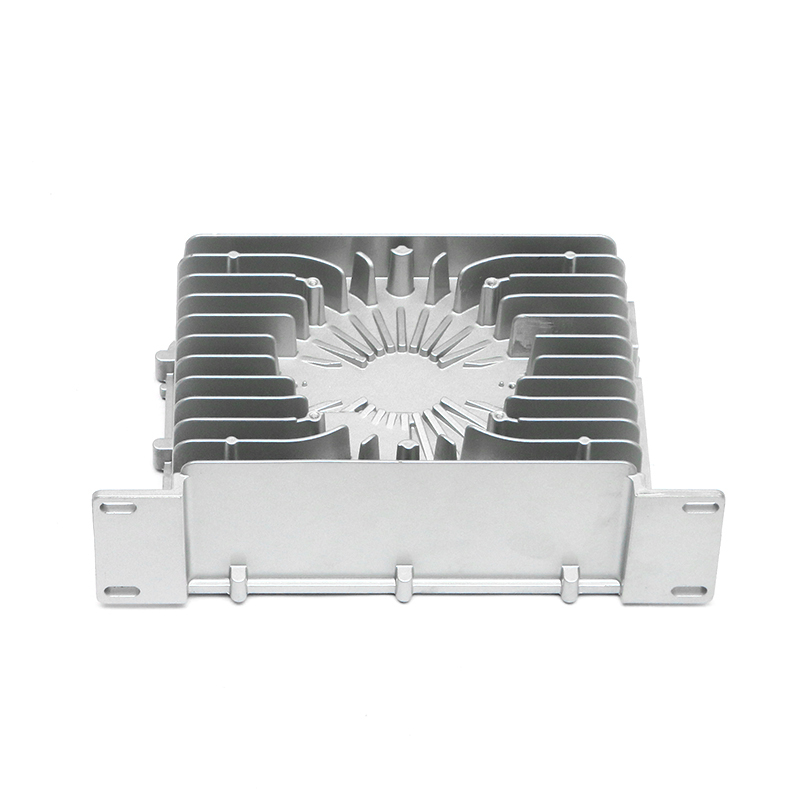
- Heat removal — conduction from the power module baseplate into the housing wall or an integrated cold plate is the primary cooling path. Thermal resistance here determines the maximum output current the inverter can sustain before derating.
- Environmental sealing — high-voltage enclosures must keep out moisture, dust, and corrosive aerosols. IP67 and IP68 are typical targets, and the housing, cable entries, and pressure-equalization membrane form a single continuous barrier.
- Electromagnetic containment — the aluminum housing shields switching noise from the inverter. Seam overlap and cover-to-base contact resistance must stay stable over thermal cycling.
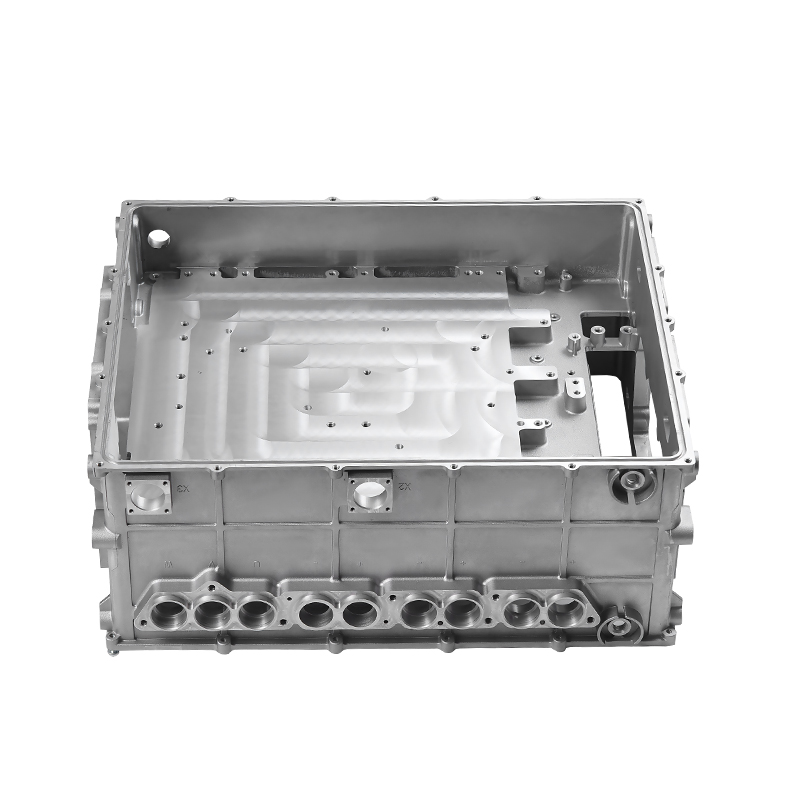
- Connector alignment — machined datum faces control connector position relative to the board stack. A few tenths of a millimeter of misalignment can bend pins or cause partially seated high-voltage connectors.
These duties interact. Fins improve cooling but complicate die filling. A thicker wall adds stiffness and shielding but slows heat transfer. Every surface is a trade-off.
Aluminum Alloys for Control Box Housings
Aluminum die castings dominate electric control box housings because they combine low density, good thermal conductivity, corrosion resistance, and economical production. Three alloys cover most production programs: A356, ADC12, and A380.
| Alloy | Thermal conductivity (W/mK) | Casting method | Typical applications | Relative cost |
|---|---|---|---|---|
| A356 | 150-155 | Permanent mold, low-pressure or gravity casting | Water-cooled housings, high-strength enclosures | Higher |
| ADC12 | 92-96 | High-pressure die casting | Air-cooled housings, high-volume parts | Lower |
| A380 | 96 | High-pressure die casting | General automotive housings, covers | Lower |
The thermal gap matters. A356 conducts roughly 50% more heat than ADC12 or A380, which noticeably lowers the temperature rise through the housing wall. The trade-off is cost and castability: A356 is more expensive and more difficult to cast in thin sections, while ADC12 fills complex fin geometry reliably at high production rates. For air-cooled housings with dense fins, ADC12 is often the right choice; for water-cooled plates with high heat flux, A356 earns its premium.
Air-Cooled vs. Water-Cooled Housing Designs
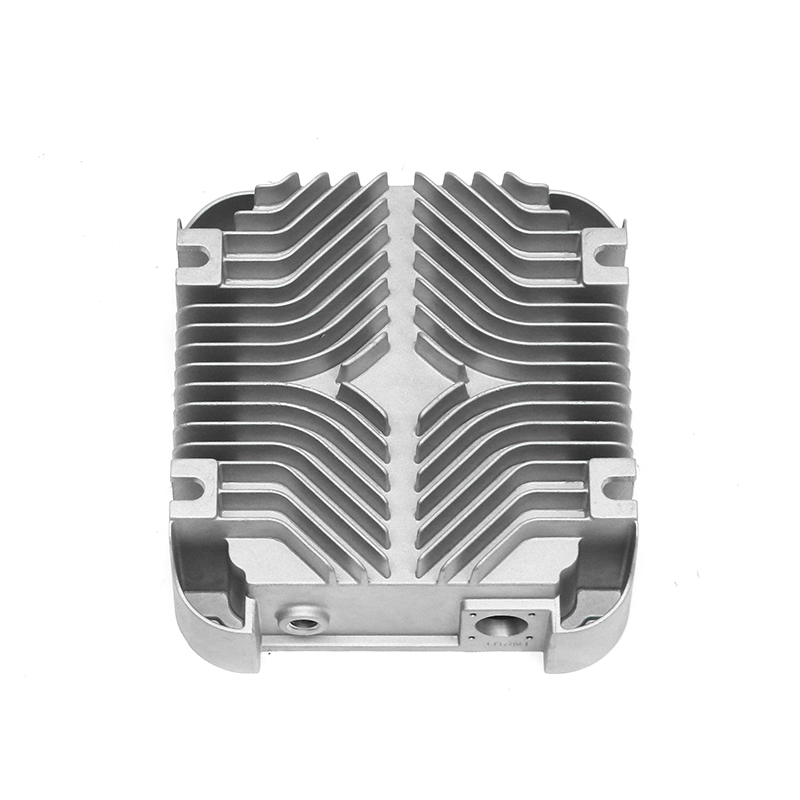
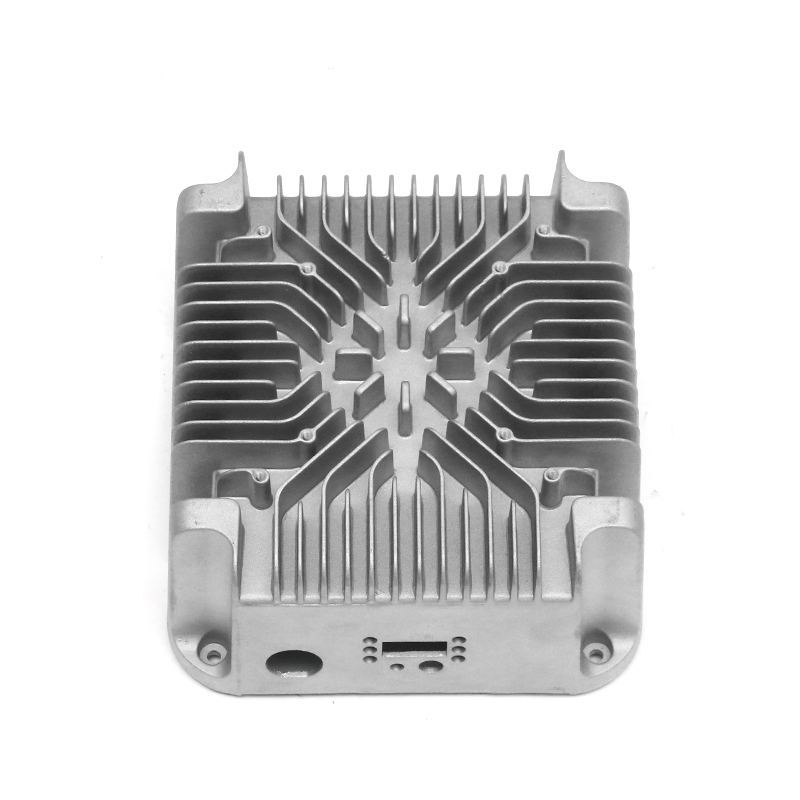
The next decision is cooling architecture. Air-cooled housings reject heat through external fins using natural convection or forced vehicle airflow. They are simple, have a single sealed cavity, and contain no coolant fittings. Their limit is heat flux: a finned aluminum enclosure typically dissipates 0.005 to 0.02 W/cm2K, and beyond that the power stage must derate. Air cooling therefore fits on-board chargers, auxiliary inverters, and DC-DC converters below about 3 kW.
Water-cooled housings use internal channels or a bonded cold plate directly under the module mounting surface. With coolant flowing through the housing, the case-to-coolant thermal resistance drops to 0.02 to 0.05 K/W, roughly ten times better than air. The costs are extra components such as a pump and hoses, plus a more complex casting with sliding cores, additional machining, and mandatory leak testing.
| Parameter | Air-cooled housing | Water-cooled housing |
|---|---|---|
| Thermal resistance (case to coolant or ambient) | 0.3-0.6 K/W | 0.02-0.05 K/W |
| Additional system components | None | Pump, hoses, coolant, expansion tank |
| Housing complexity | Finned exterior, single cavity | Internal channels, cold plate, welding |
| Typical applications | On-board chargers, low-power auxiliary drives | Traction inverters, high-power DC-DC converters |
| Production considerations | Simple die, fast cycle | Sliding cores, more machining, leak testing |
Die Casting, Machining, and Tolerances That Matter
High-pressure die casting is the most economical process for housing volumes above a few thousand pieces per year. Machines with 400 to 2000 tonnes of clamping force cover everything from small charger enclosures to large traction inverter housings. Aluminum is cast at melt temperatures near 650-680°C, and water-cooled steel dies control solidification to limit porosity.
Five tolerance features deserve the most attention in engineering review:
- Flatness of the power-module mounting surface: 0.05 to 0.1 mm over 100 mm, so the thermal interface material compresses evenly.
- Wall thickness: 2.5 to 4.0 mm on structural walls; fins can drop to 1.5 mm but require tight filling control.
- Draft angles: 1 to 2 degrees on external walls, 2 to 3 degrees on internal cores.
- Machining stock: 0.5 to 0.8 mm on sealing faces and mounting surfaces for the final CNC pass.
- Datum consistency: machining fixtures reference the same features that mate to the connector during assembly, keeping stack-up predictable.
After casting, CNC machining centers finish every critical surface that touches the electronics or the seal. Water-cooled housings often use friction stir welding to close the cooling channels, and the joint must hold 0.3 to 0.5 MPa of air pressure. Surface treatments such as anodizing improve protection, but sealing faces are masked and left uncoated to preserve flatness.
Sealing, Leak Testing, and Production Inspection
Sealing starts at the gasket groove. A machined groove with an O-ring or formed gasket absorbs flatness variation and holds compression at 15% to 25% of the gasket section. A pressure-equalization vent with a hydrophobic membrane is also required; otherwise thermal cycling pulls moisture past the seal.
Leak testing is a production step, not just a design validation. Air-tightness testers pressurize the housing to 100 to 150 kPa and compare pressure decay against a calibrated limit. For most electric control boxes, a leak rate below 0.0001 mbar L/s is accepted as meeting IP67 requirements.
| Inspection step | Equipment | What it verifies |
|---|---|---|
| Dimensional accuracy | Coordinate measuring machine (CMM) | Flatness, hole positions, sealing face geometry |
| Internal defects | Industrial CT | Porosity and voids near sealing surfaces and cooling channels |
| Material composition | Optical emission spectrometer | Alloy chemistry against specification |
| Leak tightness | Air-tightness tester | Leak rate of the assembled housing |
How to Evaluate an Electric Control Box Housing Supplier
Buyers can reduce project risk by evaluating housing suppliers against a concrete checklist:
- In-house die design and fabrication — a supplier with its own mould shop can correct gating and overflow issues in days, not weeks.
- Die casting machine range — 400 to 2000 tonnes of clamping force indicates the ability to cast housing sizes from small chargers to large traction inverters.
- Machining capacity — most housings are delivered fully machined, so the number of CNC machining centers directly affects lead time and parallel program capacity.
- Production inspection equipment — CMMs, industrial CT, spectrometers, and air-tightness testers should be part of daily production, not an acceptance lab.
- Quality certification — IATF 16949:2016 coverage for die casting and machining is the baseline expectation for automotive suppliers.
- Experience with both cooling architectures — water-cooled housings require channel cores, welding, and leak-testing skills that an air-cooled-only supplier has not proven.
An integrated manufacturer that combines mould making, die casting, machining, and inspection under one roof gives the shortest feedback loop. Ningbo Fenda New Energy Technology Co., Ltd. follows this model with six die casting machines from 400 to 2000 tonnes, 80 machining centers, and a qualification suite that includes CMMs, industrial CT, spectrometers, and multiple air-tightness testers.
The control box housing is where mechanical engineering meets power electronics. Choose the right alloy, cooling architecture, tolerances, and sealing strategy, and the electronics inside operate in a stable environment for the life of the vehicle. Give any of these factors too little attention, and field failures appear years later. The housing deserves the same design rigor as the circuit board it protects.