

 English
 русский
 عربى
 Deutsch
A water pump housing that looks clean on the bench can still fail in service. A small flatness deviation at the seal face, a shifted bearing bore, or porosity that reaches a coolant passage may not show up until the engine reaches operating temperature and the system holds pressure. That is why the housing should be specified as a sealing, alignment, and flow-control component, not as a simple cover around the impeller.
The practical conclusion comes first: choose the housing material and casting process around pressure, temperature, mass targets, production volume, and the sealing strategy. Then define the machining and inspection plan around the features that control leaks, bearing life, and assembly fit. The rest of this article explains what those features are and where purchasing and engineering teams should focus.
What the Water Pump Housing Controls
In a mechanical automotive water pump, the housing encloses the impeller and helps form the volute that guides coolant from the inlet to the outlet. It also supports the shaft and bearing arrangement, holds the seal seat, and mounts to the engine block or timing cover. On many modern designs, the housing also carries an integrated thermostat pocket, heater return port, or additional coolant channel.
Because those functions meet in one casting, the housing influences several failure modes at once:
- Coolant leaks at the seal seat, mating face, hose neck, or core plug.
- Bearing noise or premature wear when the bearing bore is out of position or roundness is poor.
- Impeller rub or reduced flow when the volute geometry or axial clearance is inconsistent.
- Cracked mounting ears or stripped threads when wall thickness and boss design are not robust.
- Corrosion or erosion when the alloy, surface condition, or coolant compatibility is unsuitable.
A useful purchasing rule is to treat the housing drawing as a stack-up of three systems: the sealing system, the rotating assembly, and the mounting interface. Each system needs its own critical characteristics and inspection method.
Material and Process Choices That Fit the Application
Aluminum die casting is common for passenger-car water pump housings because it reduces mass, accepts integrated ribs and bosses, and can be machined at high volume. Cast iron remains relevant for heavy-duty or legacy designs where thermal load and stiffness matter more than weight. Engineering plastics can work in low-pressure auxiliary circuits, but the validation must cover creep, clamp load, and long-term coolant exposure.
| Material or process | Typical fit | Key watch-outs |
|---|---|---|
| Aluminum die casting | Passenger-car and light-duty pumps, high volume, mass-sensitive designs | Porosity, wall thickness, seal-face flatness, machining stock, and die thermal control |
| Cast iron | Heavy-duty or legacy designs with high thermal load and lower volume | Mass, corrosion protection, machining cost, and thermal fatigue |
| Engineering plastic | Low-pressure auxiliary circuits or lower-temperature applications | Creep, coolant compatibility, clamp load retention, and temperature limits |
The process choice is not a brand preference. It follows the duty cycle. A housing that sees high pump pressure, repeated thermal cycling, and a narrow sealing face needs a different level of dimensional control than a low-pressure auxiliary pump housing.
Why Aluminum Die Casting Is Common in Passenger Vehicles
Aluminum die casting allows the housing to be produced close to final shape, with ribs, mounting bosses, and coolant ports formed in the die. That reduces machining time and helps keep the part light. The process also suits high-volume programs where cycle time and repeatability are important. However, die casting brings specific risks: gas porosity, shrinkage porosity, cold shuts, and dimensional variation from die wear.
For a water pump housing, those risks matter most near the seal bore, bearing bore, mounting face, and any thin wall between a coolant passage and the outside surface. A robust supplier controls gate and overflow design, die temperature, alloy cleanliness, and vacuum assistance where needed, then verifies the result with dimensional and internal-quality checks.
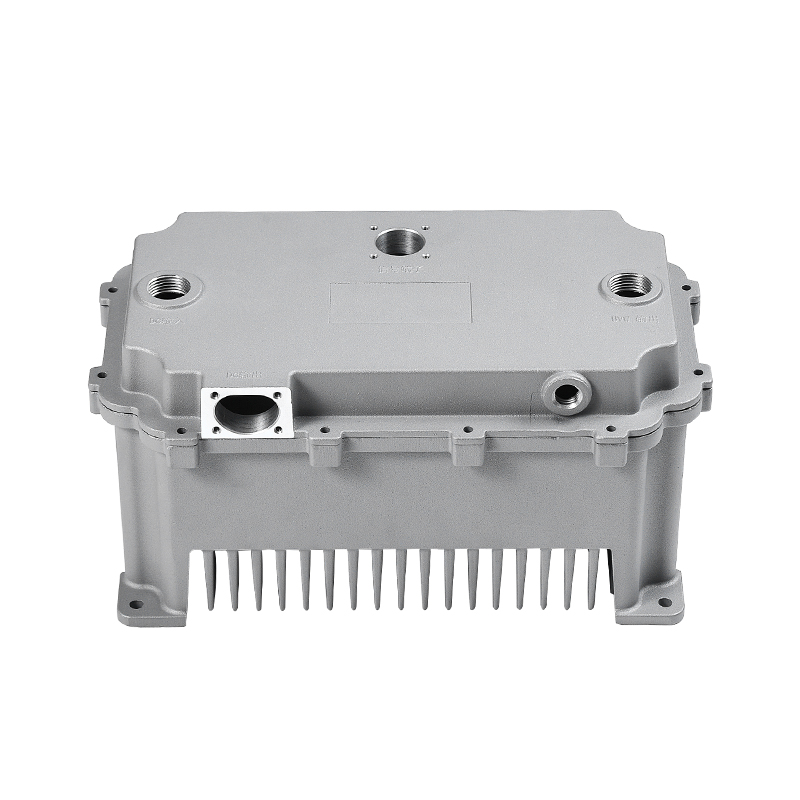
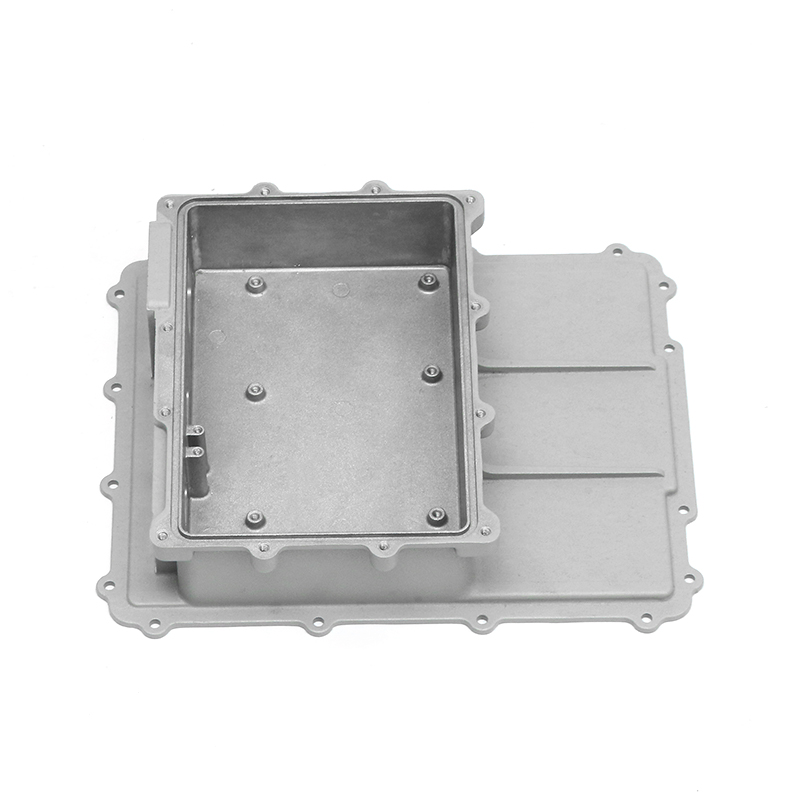
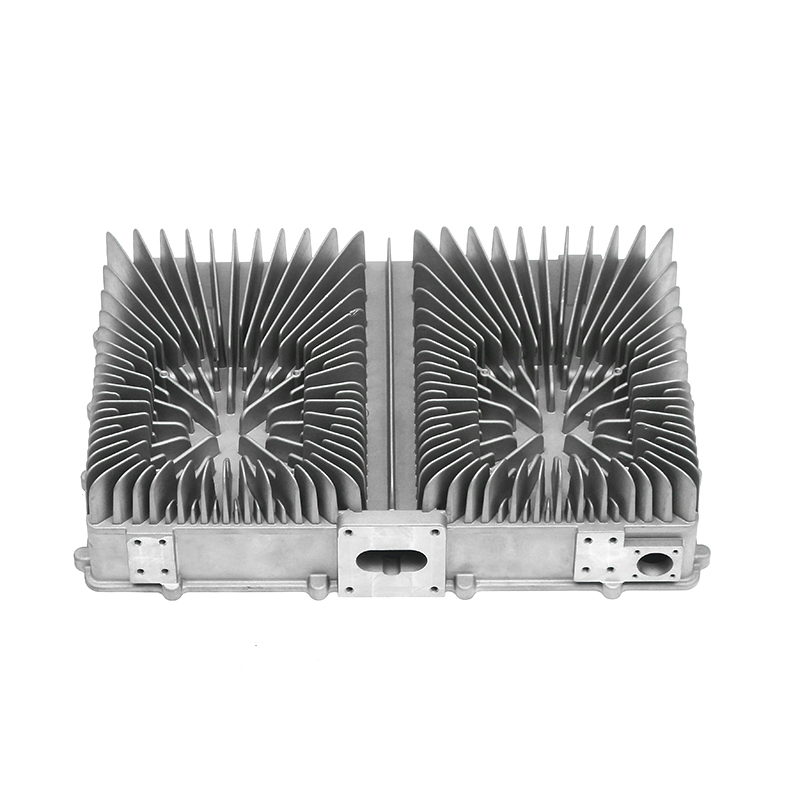
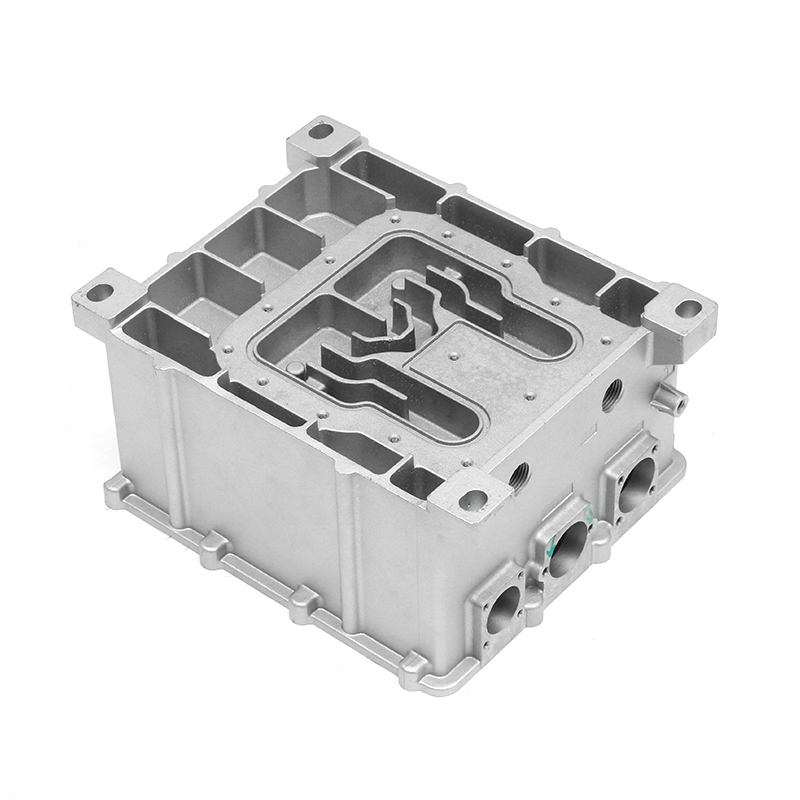
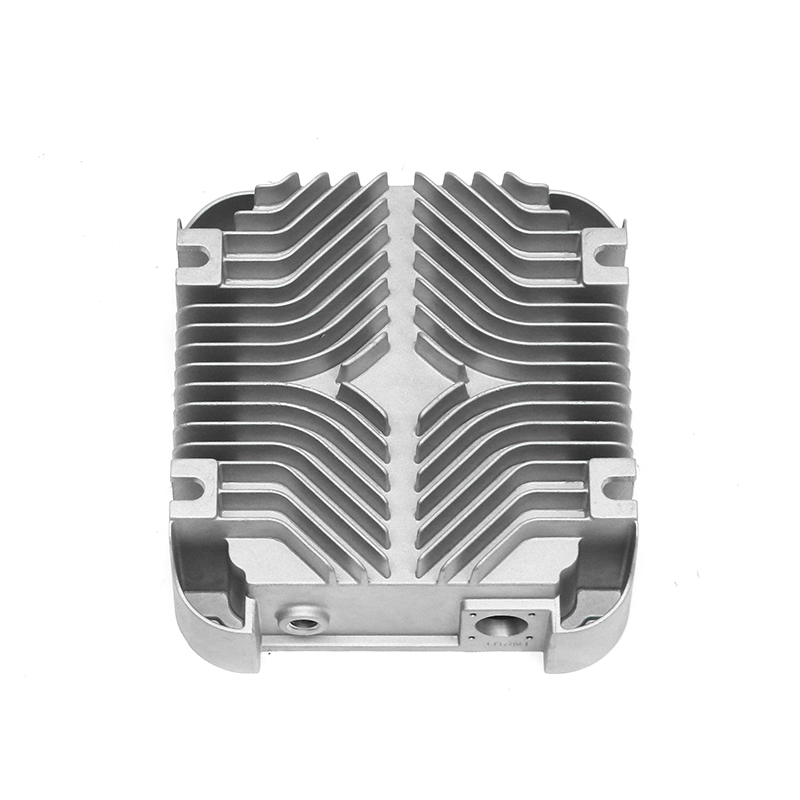
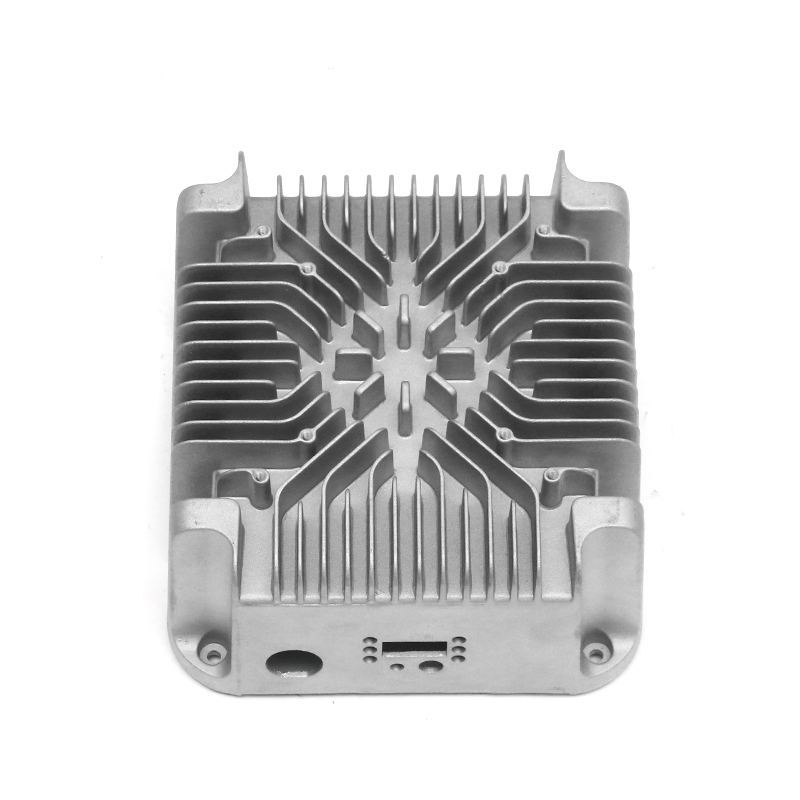
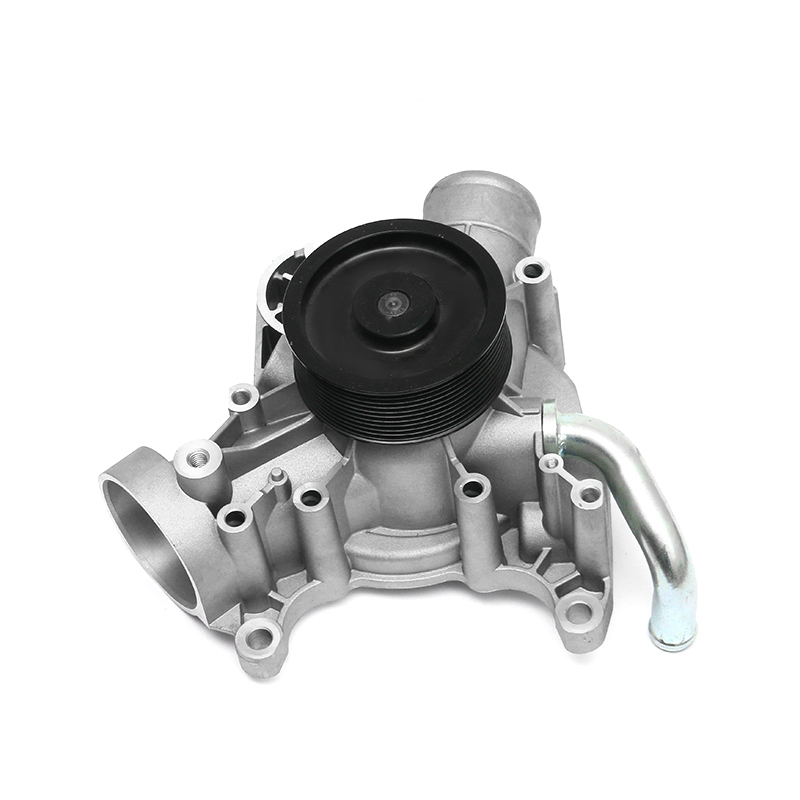 OEM/ODM Die-Cast Car Water Pump ComponentsExplore OEM/ODM die-cast car water pump components supported by in-house die design, aluminum casting, machining, and dimensional and internal-quality checks.View Product →
A manufacturer with in-house die design, 400T to 2000T aluminum casting cells, 80 machining centers, CMM, industrial CT, spectrometer, and leak testing can control these variables in one process chain. That matters because housing quality is not created at final inspection; it is built into the die, the casting parameters, and the machining fixture.
Design Details That Prevent Leaks and Early Failure
Most housing problems are designed in or designed out before the first casting is poured. The seal face needs a defined flatness and surface finish, not just a nominal dimension. The bearing bore needs position, roundness, and coaxiality control relative to the impeller axis. The mounting face needs enough stiffness to resist bolt load and thermal cycling without distortion.
Wall thickness should be uniform where possible. Isolated thick sections cool more slowly and can pull porosity or shrinkage toward the wrong area. Ribs should support the bearing housing and mounting ears without creating sharp transitions that act as stress risers. Machining stock should be sufficient for cleanup but not so generous that it opens porosity at the seal face.
Two details deserve extra attention in quotation review. First, ask how the seal seat finish is measured and maintained over tool life. Second, ask how the bearing bore is fixtured during machining, because a stable fixture is often the difference between a quiet pump and a noisy one.
Quality Checks That Matter Before the Housing Ships
A housing inspection plan should connect each critical feature to a measurement method. A general visual check is not enough. The following checks are typical for aluminum water pump housings in automotive programs:
- Dimensional layout with CMM for bearing bore position, seal-face flatness, mounting-face flatness, port location, and machined groove dimensions.
- Material verification by spectrometer to confirm alloy composition and traceability.
- Internal porosity review by industrial CT or sectioning on critical areas, especially around bores and coolant passages.
- Pressure or air-decay leak testing with a fixture that seals the same surfaces as the engine installation.
- Thread and boss checks for mounting hardware, including torque retention where the specification requires it.
The leak test specification should come from the system pressure and validation plan, not from a generic number. Test pressure, stabilization time, decay limit, and fixture design all affect whether a leak test is meaningful. A housing that passes a low-pressure test may still weep at operating temperature if the seal seat is marginal.
For a closer look at how housing and impeller conditions affect service life, this discussion on improving water pump wear resistance is useful. IATF 16949:2016 certification is also a useful baseline for automotive quality systems, but it should be supported by process capability data, change control, and traceability rather than treated as a standalone qualification.
Sourcing Questions That Reveal Real Capability
A supplier can show a catalog of castings and still struggle with a housing that needs stable sealing-face flatness at volume. Use the quotation stage to test how the supplier thinks about process control. The questions below are practical because they ask for evidence, not promises.
- Who owns the die design and die maintenance schedule, and how is die wear compensated in machining?
- How is porosity specified, where is it allowed, and how is it verified on production parts?
- What leak test pressure, fixture, and decay limit are proposed, and how does the fixture mimic installation?
- What are the process capability targets for bearing bore diameter, position, roundness, and seal-face flatness?
- How are alloy heat lots, castings, machining lots, and leak test results traceable to the finished housing?
- What change control applies to die repairs, machining fixtures, and secondary operations after PPAP?
Clear answers usually point to a supplier that understands the housing as a system. Vague answers tend to shift risk to the buyer after tooling is approved.
Matching the Housing to the Cooling System
The housing does not work alone. Coolant chemistry, system pressure, thermostat behavior, hose loads, and the water pump bearing arrangement all influence its service life. An aluminum housing may need a compatible coolant inhibitor package to control corrosion. A plastic housing may need clamp-load validation because plastic creeps under sustained bolt load. A cast iron housing may need a coating or surface treatment in a wet environment.
- Confirm coolant compatibility for the chosen alloy or polymer.
- Define flatness and surface finish for the seal face and mating face.
- Check mounting stiffness and bolt torque retention under thermal cycling.
- Validate the leak test against real installation conditions.
- Review corrosion and erosion risk at the inlet, outlet, and narrow passages.
When those points are settled before tooling release, the housing becomes a predictable casting and machining part rather than a source of field returns.
A well-specified water pump housing starts with the duty cycle and ends with a measurement plan. Material, casting process, wall design, machining strategy, and leak testing should all point to the same critical features: sealing, bearing alignment, mounting stability, and coolant compatibility. Buyers who ask for evidence on those points get a more reliable housing and fewer surprises after the first production run.