

 English
 русский
 عربى
عربى Deutsch
A water pump housing has to survive pressure, heat, and coolant chemistry for a decade — the casting process decides whether it actually will.
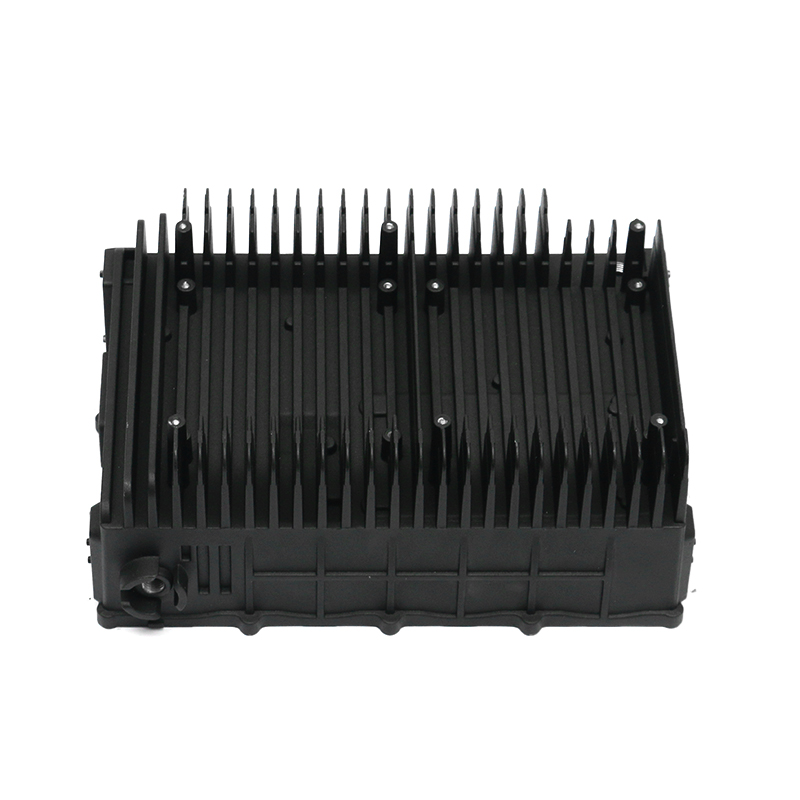
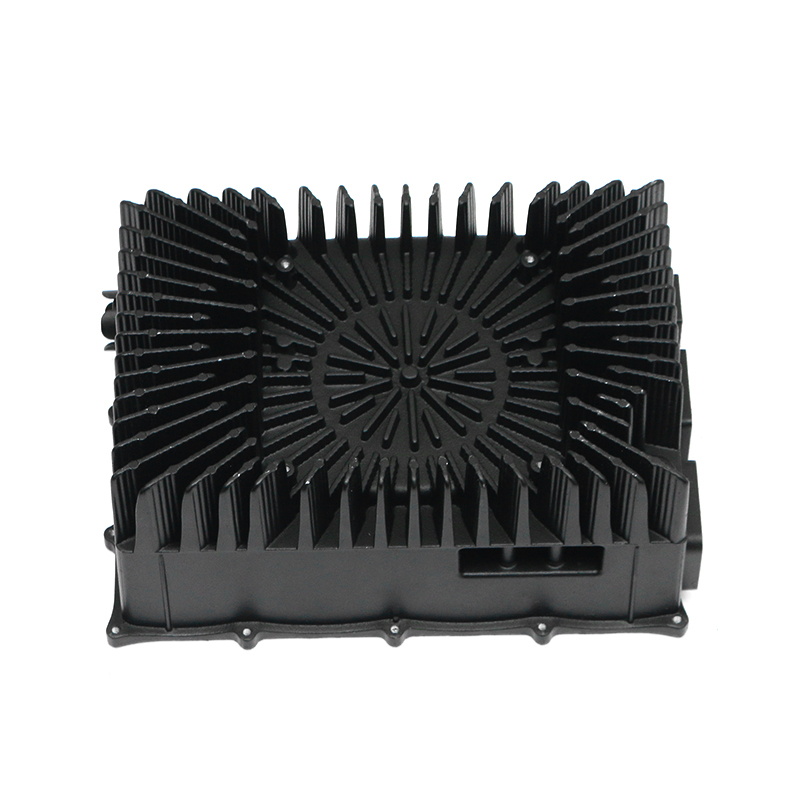
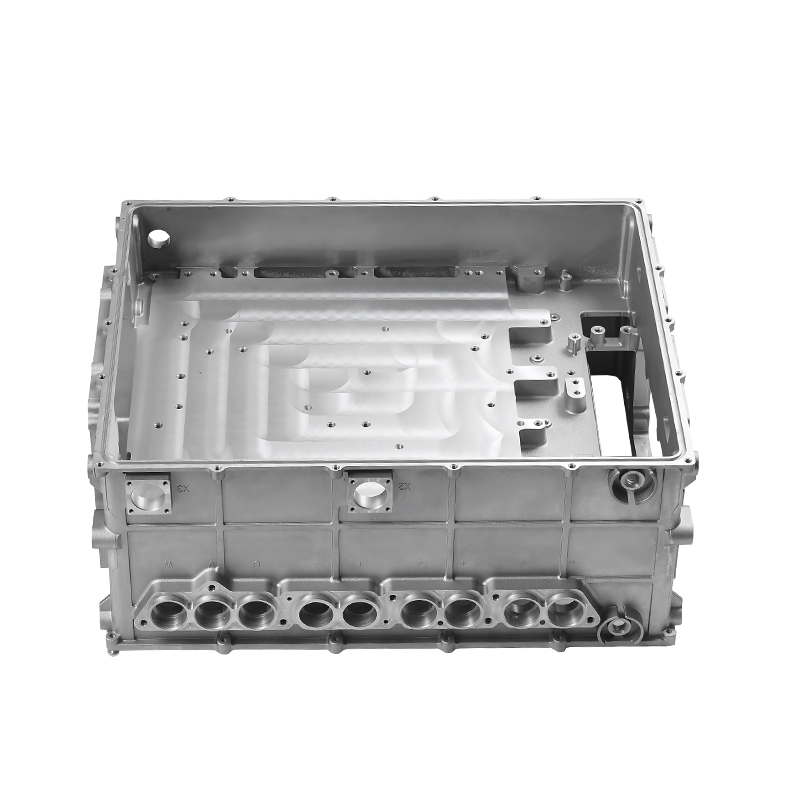
A water pump housing looks simple from the outside, but it sits at the intersection of some demanding requirements: it has to hold pressurized coolant without leaking, resist corrosion from glycol-based fluids for years, dissipate heat efficiently, and keep tight tolerances around a rotating impeller shaft. Die casting became the dominant manufacturing method for this part because it satisfies all four requirements in a single, repeatable process — but the choices made within that process, from alloy selection to machine type, still separate a housing that lasts 150,000 miles from one that doesn't.
Typical cycle requirement — die casting forms a complete housing in a single injection, unlike multi-step fabrication methods.
Approximate weight difference between zinc and aluminum alloys, a major factor in why aluminum dominates automotive housings.
The acceptable leak rate for a finished water pump housing — any failure here can allow coolant into the engine.
Material comparisonAluminum vs Zinc vs Cast Iron: Choosing the Right Material
Three metals have historically competed for water pump housing production, and each pulls in a different direction on weight, cost, and durability. Aluminum has become the standard for modern passenger vehicles, but understanding why means comparing it directly against the alternatives rather than assuming the choice was arbitrary.
| Material | Relative Weight | Corrosion Resistance | Thermal Conductivity |
| Aluminum | Baseline (lightest) | Good, with proper coating | High — dissipates heat efficiently |
| Zinc | About 2.5× heavier | Very good in mild environments | Moderate |
| Cast Iron | Roughly 3× heavier | Prone to rust without coating | Lower than aluminum |
Aluminum wins the water pump application primarily because vehicle weight directly affects fuel economy and, in electric platforms, driving range. Zinc still shows up in some heavy-duty or industrial pump housings where its superior tool life and finer surface finish justify the added weight, while cast iron has largely receded to older platforms and select commercial applications.
Machine comparisonHot Chamber vs Cold Chamber: Which Process Fits a Water Pump Part
Die casting isn't a single machine type — the injection system used depends entirely on the alloy being cast, and aluminum's chemistry rules out one of the two main approaches.
Cold Chamber (Aluminum)
- Molten metal is ladled from a separate holding furnace into the shot sleeve for each cycle
- Required for aluminum, since it would corrode the plunger mechanism in a hot chamber machine
- Slightly slower cycle time than hot chamber, but necessary for aluminum's melting chemistry
- Standard process for virtually all automotive water pump housings today
Hot Chamber (Zinc / Magnesium)
- Injection mechanism sits directly inside the molten metal reservoir
- Faster cycle times, since metal doesn't need to be transferred between stations
- Well suited to zinc's lower melting point and casting behavior
- Not used for aluminum housings due to metal-compatibility limits
Process comparisonDie Casting vs Sand Casting vs Investment Casting for Pump Housings
Die casting isn't the only way to cast a water pump housing, and the alternatives still show up for prototypes, low-volume runs, or unusually complex geometries.
| Process | Best For | Trade-off |
| High-pressure die casting | High-volume production with thin walls and tight tolerances | High tooling cost, only economical at volume |
| Sand casting | Larger, simpler housings or very low production volumes | Rougher surface finish, thicker minimum wall sections |
| Investment casting | Small, intricate housings needing high dimensional precision | Slower cycle time, higher per-part cost at volume |
For a mass-produced passenger car water pump, die casting wins on nearly every practical metric once production volume clears the tooling investment threshold — which is almost always the case for a part ordered by the hundreds of thousands.
Structural integrityWhy Leak-Free Casting Is Non-Negotiable for This Part
A water pump housing sits directly in the coolant loop, meaning even a microscopic porosity defect can eventually let pressurized coolant escape or, worse, let air enter the cooling system. This is why pressure decay leak testing is standard practice on finished housings before they ever reach an assembly line — a housing that shows any measurable pressure drop over the test window gets rejected outright, regardless of how clean it looks externally.
Design constraintsDesign Features That Make a Housing Die-Casting Friendly
- Uniform wall thickness throughout the housing to promote even cooling and avoid warping during solidification
- Draft angles on vertical surfaces so the finished part releases cleanly from the die without damage
- Generous fillets at internal corners to reduce stress concentration around the impeller cavity
- Integrated mounting bosses and bolt patterns cast directly into the part to reduce secondary machining
Secondary operationsMachining and Finishing After the Casting Leaves the Die
- Trimming removes the runner and gate material left over from the injection process, typically through in-die cutting or a dedicated trim press.
- CNC machining establishes the precise sealing surfaces, bearing bore, and bolt holes that casting tolerances alone can't guarantee.
- Surface treatment, often a protective coating or sealant impregnation, closes any remaining microporosity before final assembly.
- Pressure decay leak testing confirms the finished housing holds spec under simulated operating pressure.
Quality controlCommon Defects in Water Pump Die Castings and How They're Caught
- Porosity from trapped gas during injection, typically identified through X-ray or pressure decay testing rather than visual inspection alone
- Cold shuts, where metal flow fronts fail to fully fuse, often traced back to injection speed or die temperature settings
- Dimensional drift on sealing surfaces, caught during CNC machining verification before parts move downstream
- Surface flow lines or blistering linked to trapped air, usually resolved by adjusting venting in the die design