

 English
 русский
 عربى
عربى Deutsch
Introduction: Why Die Casting Dominates Automotive Manufacturing
Open the hood of a modern combustion or electric vehicle and you will find die cast aluminum doing quiet but essential work. Engine blocks, transmission housings, oil pans, brackets, and powertrain enclosures are all formed by forcing molten metal under high pressure into a steel mold. The process is fast, repeatable, and capable of producing complex geometry in one shot, which explains why automotive engineering relies on it more than any other metal forming method.
The drive for lighter vehicles, tighter packaging, and high-volume cost efficiency has pushed die casting to the center of automotive production. A single casting can replace a welded assembly of stamped parts, reduce weight, and shorten supply chains. At the same time, the process is not just a single machine operation. It depends on precise tooling, controlled melting, careful ejection, and post-cast machining.
A company like fddiecasting.com illustrates why die casting is rarely a standalone step. It combines mold design, aluminum casting, and precision machining under one roof, which keeps tolerance control and communication tight from the first design review to final inspection. In the following sections, we will walk through the process, materials, quality checks, and supplier evaluation criteria so you can make better decisions for your own automotive parts.
The Die Casting Process Explained Step by Step
Every automotive die casting starts with a concept of the finished part and ends with a ready-to-machine component. The overall flow can be grouped into four stages: tooling, injection, solidification, and trimming.
Mold Design and Tooling
The mold, or die, is the single largest factor in casting quality. It determines dimensional accuracy, surface finish, and how consistently the metal fills thin walls. The die steel must withstand thermal cycling, and the runner and overflow system must be designed so air and oxides can escape.
Suppliers with in-house tooling expertise, including precision trimming mold designs, can better control this critical step. Since fddiecasting.com started as a mold manufacturer in 2006, the company treats tooling as a core competence rather than an outsourced task. That history directly affects defect rates and lead times.
Melting and Injection
Automotive aluminum parts are almost always produced on cold-chamber die casting machines. In this process, metal is melted in a separate furnace and then ladled into a shot chamber, where a hydraulic piston pushes it into the die at high speed. Hot-chamber machines, which keep the injection mechanism submerged in molten metal, are better suited to zinc and magnesium alloys with lower melting points.
Machine clamping force determines the maximum part size that can be produced. fddiecasting.com operates six cold-chamber machines from 400 to 2,000 tons of clamping force, allowing it to cover parts ranging from small mirror brackets to large motor housings.
Cooling, Ejection and Trimming
After injection, the metal cools quickly in the water-cooled die. Solidification time controls the microstructure and the risk of shrinkage porosity. Once the part is solid, ejector pins push it out, and the cycle repeats. The part then moves to trimming, where the runner, overflows, and flash are removed.
Automotive components typically require secondary operations such as deburring, machining, and surface treatments. The integration of casting with later processes is why fddiecasting.com maintains 80 high-speed precision machining centers in the same facility.
Choosing the Right Alloy for Automotive Die Cast Parts
Material selection determines mechanical strength, corrosion resistance, thermal conductivity, and cost. There is no single best alloy for every part, but the choices can be narrowed down by function.
Aluminum Alloys
Aluminum is the dominant material for automotive die castings. It offers a good strength-to-weight ratio, excellent thermal conductivity, and natural corrosion resistance. Aluminum alloys, particularly A380, are used for engine blocks, transmission housings, oil pans, motor housings, and electronic control enclosures. The alloy flows well in thin sections and can fill complex die geometries.
Zinc Alloys
Zinc alloys deliver high ductility, impact strength, and the ability to be plated or finished easily. They are typically used for small precision parts such as mirror brackets, door latches, and interior hardware. The downside is density: zinc is heavy and rarely chosen for large structural components.
Magnesium Alloys
Magnesium is the lightest structural metal, offering the best strength-to-weight ratio of the three. It appears in parts where every gram matters, such as steering wheel cores, seat frames, and instrument panel structures. Magnesium faces higher material cost and corrosion concerns, so it is selected only when weight savings clearly justify the premium.
| Alloy | Main Properties | Typical Components |
|---|---|---|
| Aluminum (A380) | Good strength-to-weight, high thermal conductivity, corrosion resistance | Engine blocks, transmission housings, motor housings, EC housings |
| Zinc (Zamak) | High ductility, excellent surface finish, easy plating | Small brackets, mirror mounts, latches, interior hardware |
| Magnesium (AZ91D) | Lightest structural metal, very high specific strength | Steering wheel frames, seat frames, lightweight brackets |
To ensure that the correct alloy is delivered, fddiecasting.com uses an Oxford Hitachi spectrometer to verify the chemical composition of every incoming melt. This prevents costly mix-ups before parts are cast.
Common Automotive Parts Produced by Die Casting
Die castings are spread across the vehicle, from the engine bay to the suspension and the electric drive unit. Understanding the range helps when planning a supplier list.
Engine and Powertrain Components
Conventional powertrains rely heavily on aluminum die castings. Engine blocks are the most visible example, but oil pans, water pumps, oil filter bases, fan clutches, and engine mounts are also cast. These parts must resist vibration, manage heat, and seal lubricants. They are often supplied as aluminum die cast auto parts that combine structural rigidity with heat dissipation.
Transmission and Chassis Parts
Transmission housings are large castings that hold gears, shafts, and hydraulic circuits. The housing also functions as the structural connector between the engine and the rest of the drivetrain. In the chassis area, rearview mirror brackets, shock absorber brackets, and throttle bodies are produced in high volume using die casting.
New Energy Vehicle Components
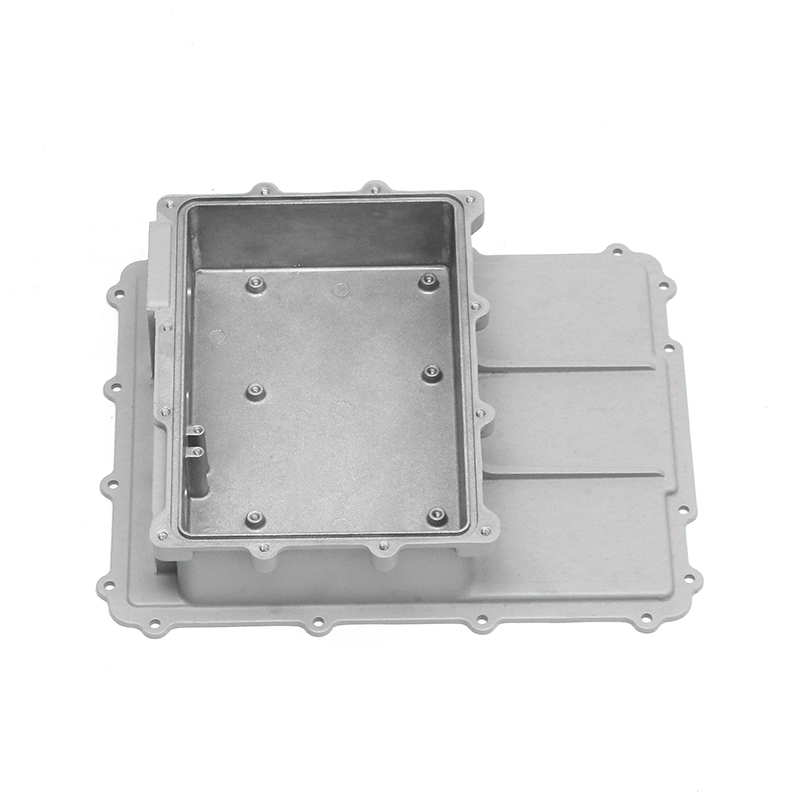
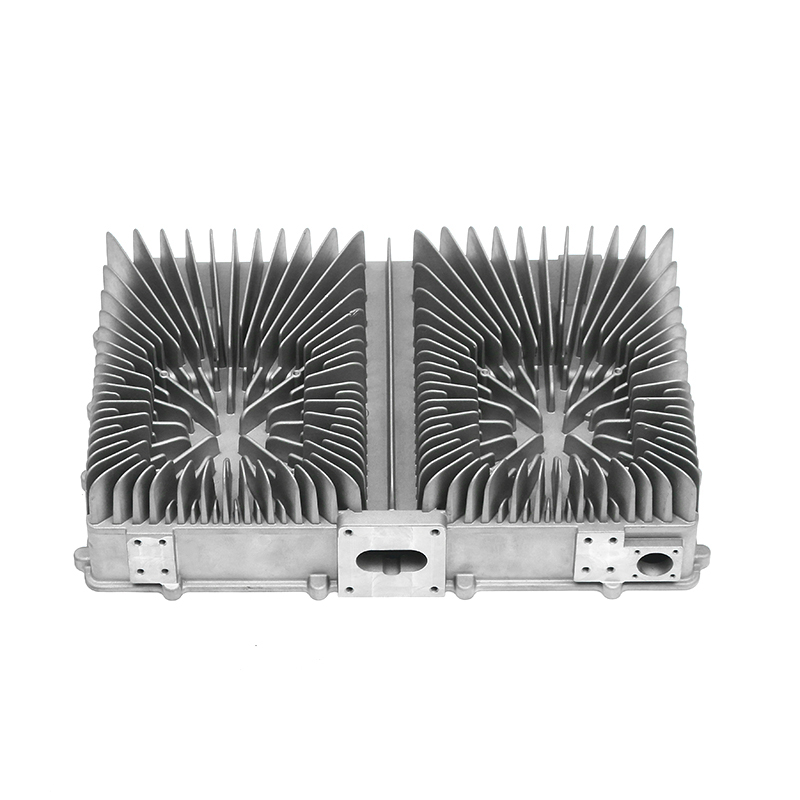
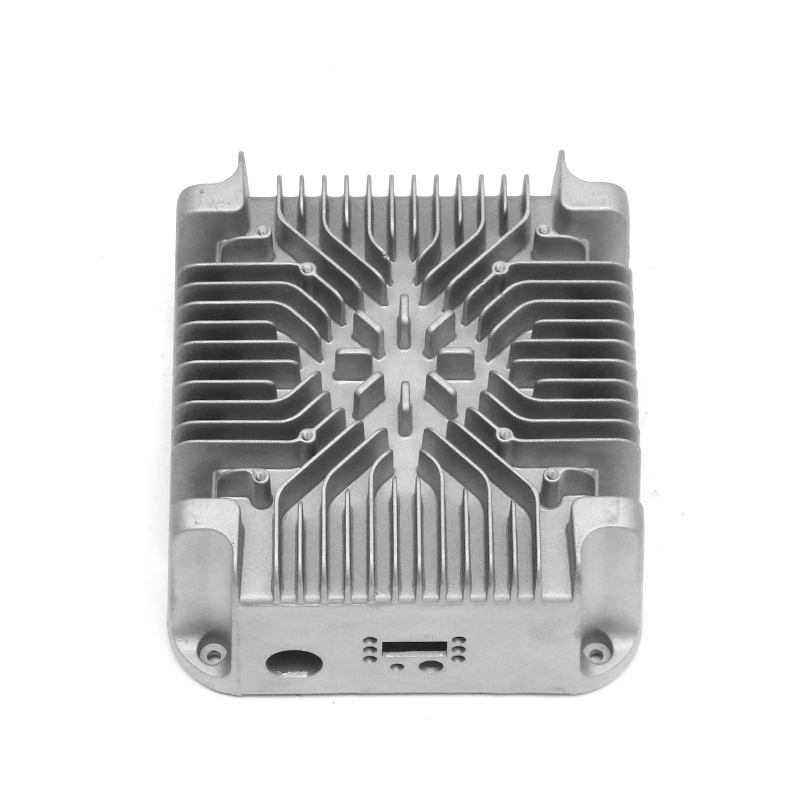
Electric vehicles create a different set of demands. Motor housings must remove heat from copper windings while protecting them from contaminants. Electronic control units require die cast enclosures that combine thin walls with flat sealing surfaces.
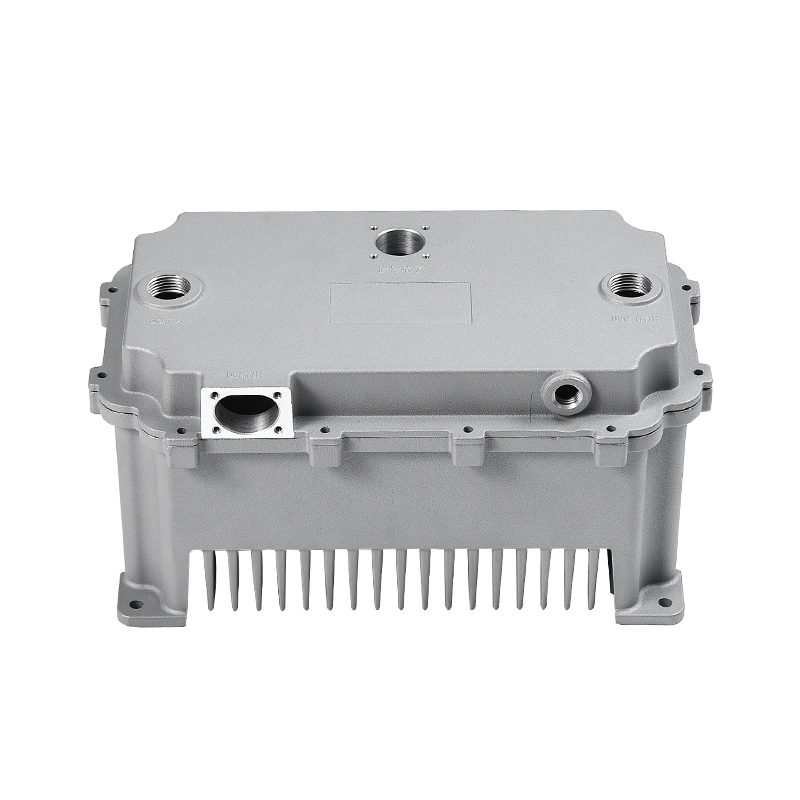
Water-cooled electronic control housings are a good example. These parts must stay leak-proof under thermal cycling and vibration while housing sensitive power electronics. That is why they demand stricter dimensional and pressure testing than many traditional castings.
Quality Assurance in Automotive Die Casting
Automotive buyers do not evaluate a die casting only by its shape. Internal soundness, material composition, dimension accuracy, and sealing all have to be verified. The credibility of a supplier depends on the depth of its inspection chain.
Dimensional Inspection
Coordinate measuring machines (CMMs) are the standard for verifying critical dimensions on automotive parts. fddiecasting.com uses Zeiss CMMs to check datums, hole positions, and wall thickness with high precision. These measurements are documented to support production part approval.
Internal Defect Detection
Porosity and shrinkage voids can form inside a casting without affecting the visible surface. Industrial CT scanning and X-ray inspection reveal these internal defects before expensive machining is applied. CT also helps validate that cores and internal cooling channels are placed correctly.
Material Verification
A spectrometer confirms that the alloy matches the specified grade, not just an approximate composition. This step is particularly important when a part changes from a development sample to mass production. An Oxford Hitachi spectrometer at fddiecasting.com provides traceable material data for every batch.
Leak Testing
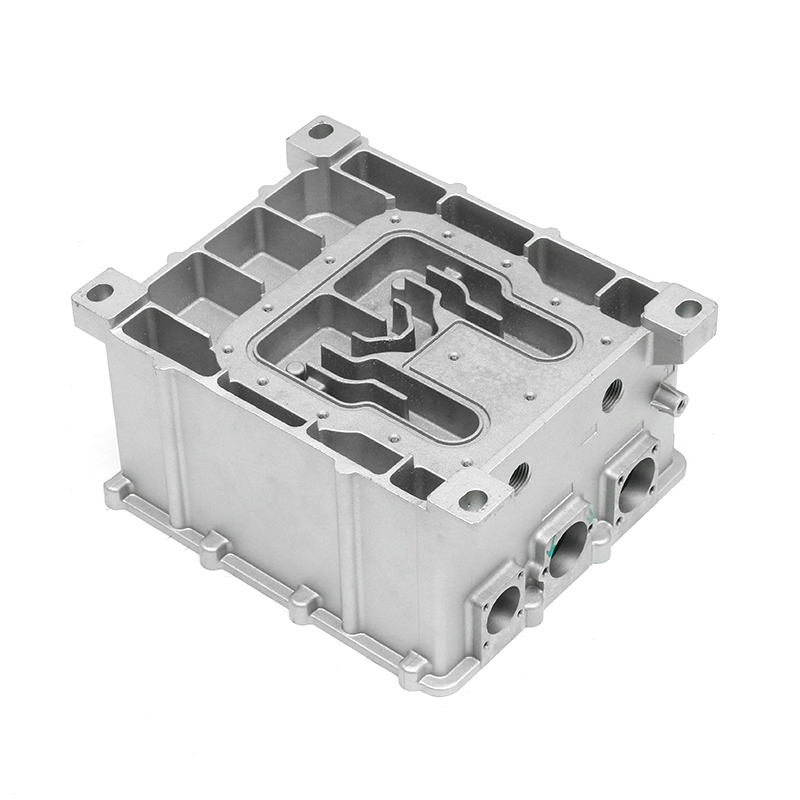
Leak testing is required for oil pans, transmission cases, pump bodies, and many EV enclosures. Compressed air or helium is introduced into internal cavities while the outside is monitored for pressure decay. This is especially critical for die cast gearbox housings, where internal lubricant retention directly affects transmission reliability. Dedicated air pressure test machines at fddiecasting.com verify that every sealed component leaves the plant without leaks.
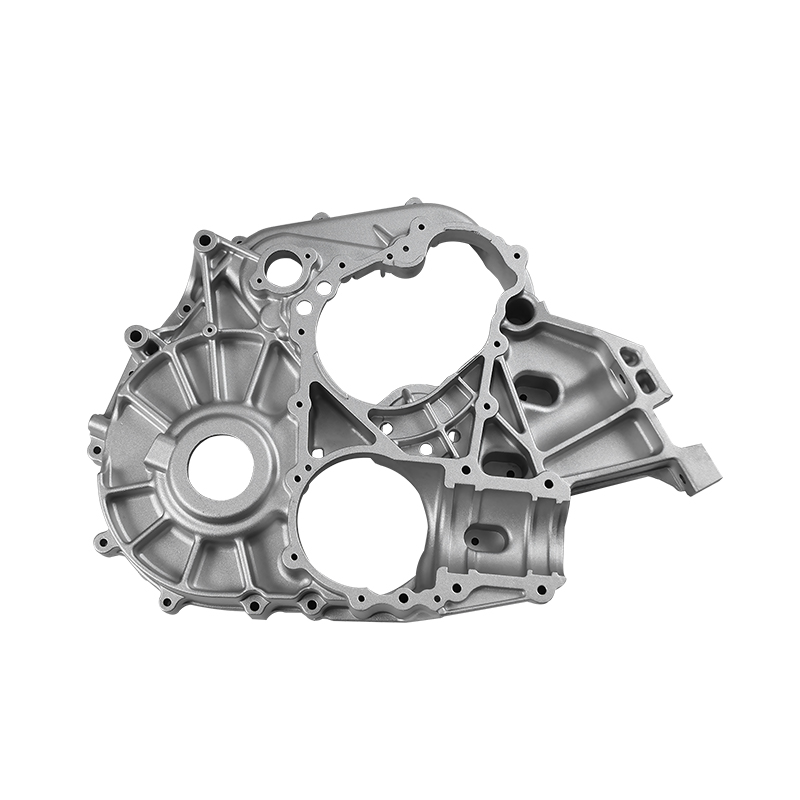 Custom Die Casting Gearbox Housing Manufacturers, OEM/ODM SuppliersAs China die casting gearbox housing manufacturers and OEM/ODM gearbox housing suppliers, Ningbo Fenda New Energy Technology Co., Ltd., c...View Product →
Die Casting vs. Alternative Manufacturing Methods
Die casting competes with several other metal forming technologies. The right choice depends on volume, geometry, thickness, and required mechanical properties.
Compared with CNC machining, die casting is dramatically more economical at high volume. Machining starts from solid billet and removes a large percentage of material, while die casting produces net or near-net shapes with much less waste. CNC is still preferred for small batches, complex five-axis features, or final finishing. In practice, many die castings are followed by a short machining pass to hold tight tolerances on sealing faces.
Compared with forging, die casting can form far more complex thin-wall structures with fine details. Cold forging produces stronger parts because the grain structure is aligned with the part contour, but the shapes are limited to simpler geometries. For an engine block or a motor housing, casting is the only practical way to create internal cavities and cooling channels.
The main limitations are die cost and production volume. A steel die can cost hundreds of thousands of dollars, so die casting only makes sense for annual volumes in the tens of thousands. Surface porosity can also remain an issue for leak-tight or highly stressed parts, which is why vacuum-assisted casting and specialized alloys are increasingly used.
How to Evaluate an Auto Parts Die Casting Supplier
When the design is ready, the next question is who should cast it. A focused evaluation should cover at least the following areas.
- Tooling capability: Ask whether the supplier designs and manufactures custom die casting molds in-house. This directly affects lead times and defect rates.
- Machine range: Check die casting tonnage and the number of machines. A supplier with 400 to 2,000 ton machines can cover both small brackets and large housings.
- Quality system: IATF 16949:2016 should be the minimum for automotive supply. It demonstrates a working approach to risk analysis, change control, and customer-specific requirements.
- Inspection equipment: Look for CMM, industrial CT, spectrometers, and leak testers. These tools indicate whether the supplier can verify what it produces.
- Secondary processing: In-house machining, friction stir welding, and surface preparation reduce logistics complexity and keep quality ownership with one supplier.
- International communication: A supplier that offers multilingual support, as fddiecasting.com does in English, Russian, Arabic, and German, simplifies the quoting and engineering change process.
By scoring a possible partner against these criteria, you avoid surprising defect rates and late deliveries after the program is launched.
The Future of Auto Parts Die Casting: EV and Lightweight Trends
Electric vehicles are reshaping die casting demand in two directions: larger integrated body structures and highly engineered powertrain enclosures. Large die casting machines, now reaching 6,000 tons or more, allow the production of entire front or rear sections of a car in one part. These integrated castings reduce the number of joints, cut weight, and shorten the body shop process.
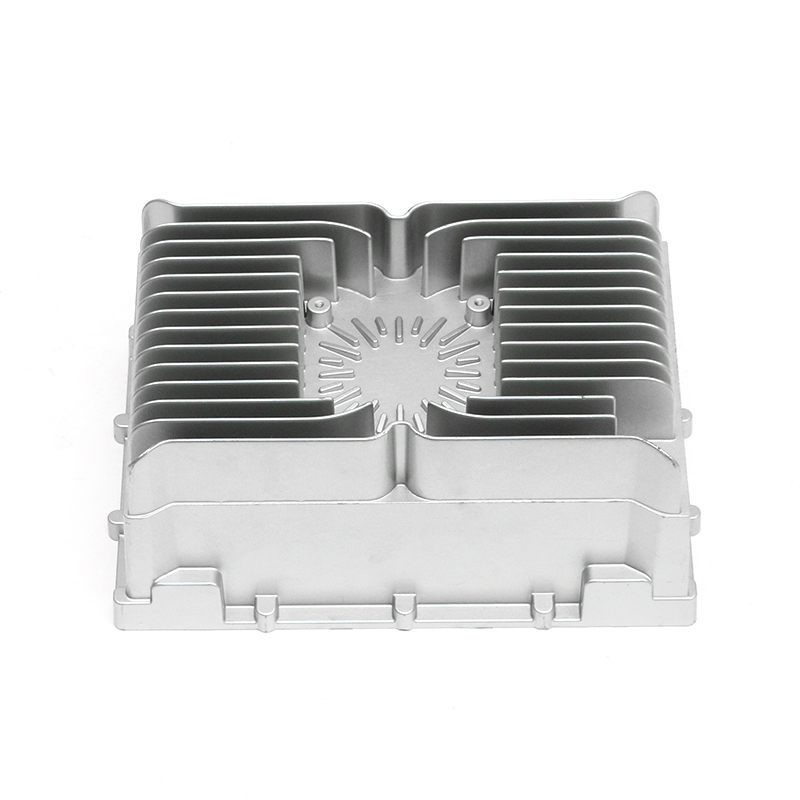
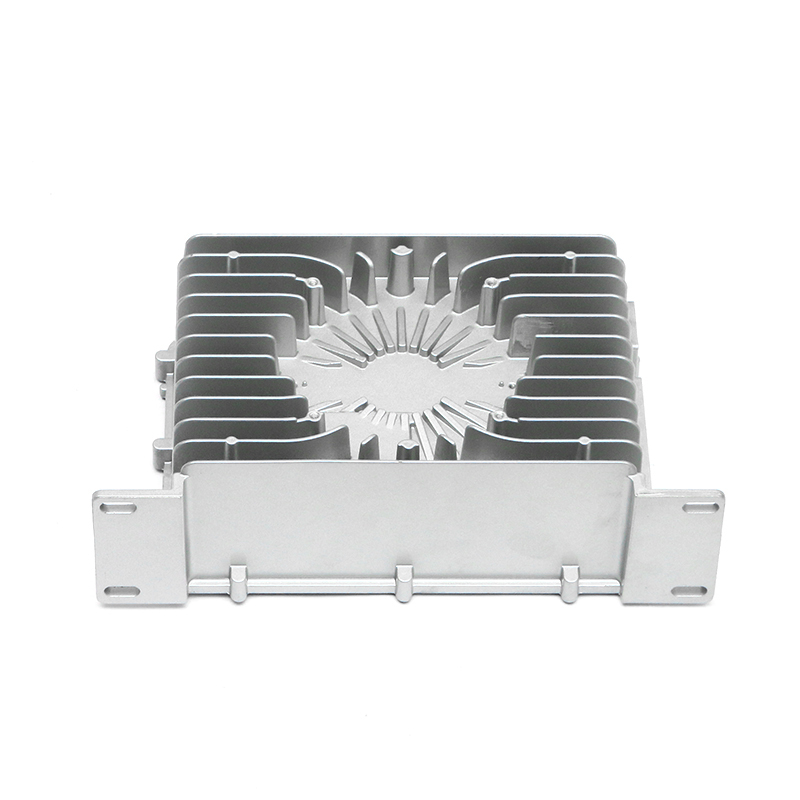
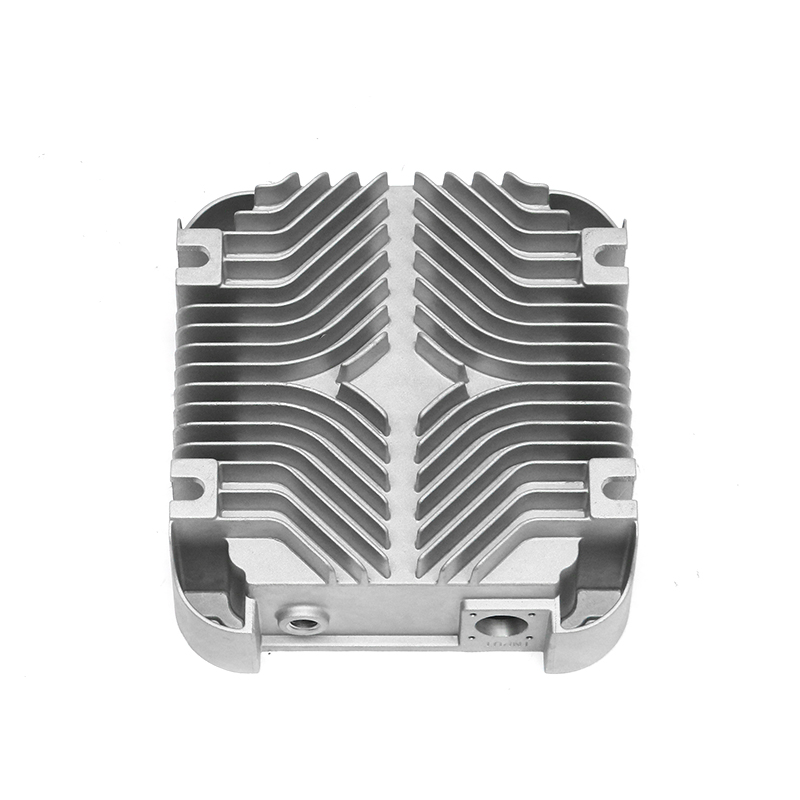
New energy motor housings illustrate the second trend. Modern new energy motor housings combine thin-wall casting with integrated cooling channels to maximize power density. This forces tighter control over wall thickness and internal geometry.
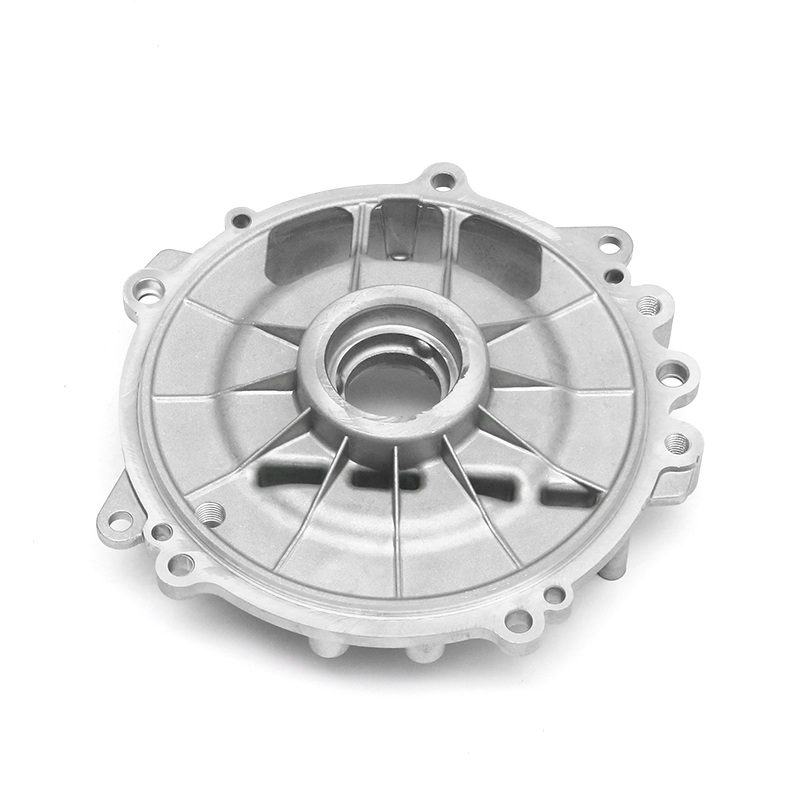 New Energy Die Casting Motor Housing Manufacturers, Suppliers, FactoryNingbo Fenda New Energy Technology Co., Ltd., is China new energy motor housing manufacturers and suppliers, our factory offer OEM/ODM ne...View Product →
Friction stir welding is also becoming a relevant partner to die casting. It joins cast components to each other or to extrusions without melting the base material, preserving both strength and sealing performance. More than 30 friction stir welding and other dedicated machines at fddiecasting.com support this kind of hybrid assembly work.
Sustainability is the third driver. Aluminum castings are highly recyclable, and the automotive industry increasingly asks for lower carbon impact. Die casting fits this direction because efficient production and short machining times reduce energy use per part, and recycled alloys can be re-melted without losing typical mechanical properties.
Conclusion
Auto parts die casting remains the most practical way to produce high-volume, complex, and lightweight structural components for both combustion and electric vehicles. It dominates because it combines three advantages: excellent geometry freedom, strong cycle efficiency, and low per-part cost at scale.
When you select a supplier, you are really selecting a package of process control, inspection depth, and engineering experience. A partner like fddiecasting.com brings mold-making heritage, six large die casting machines, 80 precision machining centers, IATF 16949:2016 certification, and a complete verification laboratory, including CMM, CT, spectrometers, and leak testing. These capabilities matter most when a new part enters production and every production piece has to be right.
If you are evaluating die casting partners for a current project or a future program, send your drawings to the team at fddiecasting.com for a feasibility review. A clear technical discussion up front will save cost and risk later.