

 English
 русский
 عربى
عربى Deutsch
A water pump housing is the part that converts a coolant leak complaint into a repair decision. It does not rotate, and it is rarely the first component replaced, but once its face is warped or its wall is porous, the pump fails. Understanding how housings are cast, machined, and tested makes supplier evaluation easier and prevents repeat failures.
What a Water Pump Housing Does
The water pump housing is the structural boundary that keeps coolant inside the cooling circuit. It contains the pump inlet and discharge, supports the shaft bearing, provides a machined face for the engine block, and carries the gasket or O-ring that prevents seepage.
Because the housing is connected to the hot engine block, it must hold its shape through thermal cycles from cold start to normal operating temperature. A housing that flexes or creeps disturbs the seal between the pump and the block. The impeller clearance is also controlled by the housing; if the housing deflects, the impeller can rub against the casing and reduce flow.
The material selected for the housing affects how the pump behaves in service. Cast iron and aluminum dominate production for different reasons.
Cast Iron Versus Aluminum for Water Pump Housings
Cast iron housings are still common in heavy-duty and older engine platforms. They tolerate vibration, resist erosion from particulates, and their higher weight is rarely a problem in a large engine bay. Their weak point is corrosion, particularly when the coolant is not maintained and the protective coating is damaged.
Aluminum die-cast housings are the default for modern passenger cars and electric vehicles. They save weight, conduct heat away from the bearing area, and allow the cooling system to reach operating temperature more consistently. Aluminum needs a denser casting structure to resist porosity, so the die-casting process matters more than with cast iron.
| Property | Cast Iron Housing | Aluminum Die-Cast Housing |
|---|---|---|
| Weight | Heavy; may amplify belt and bearing load | Light; easier to manage in front-drive layouts |
| Corrosion resistance | Dependent on coating and coolant chemistry | More stable when surface treatment is correct |
| Machinability | Harder on tooling; stable dimensions | Excellent with a fine-grain structure |
| Heat transfer | Moderate; can keep coolant warm | Higher; helps remove heat from the bearing well |
| Typical failure | Rust around the gasket face | Porosity leak at thin-wall sections |
The failure in an aluminum housing is not always visible from the outside. A porous section under the discharge port may seep only when the system is pressurized and hot. That is why the casting process and leak testing are not optional steps.
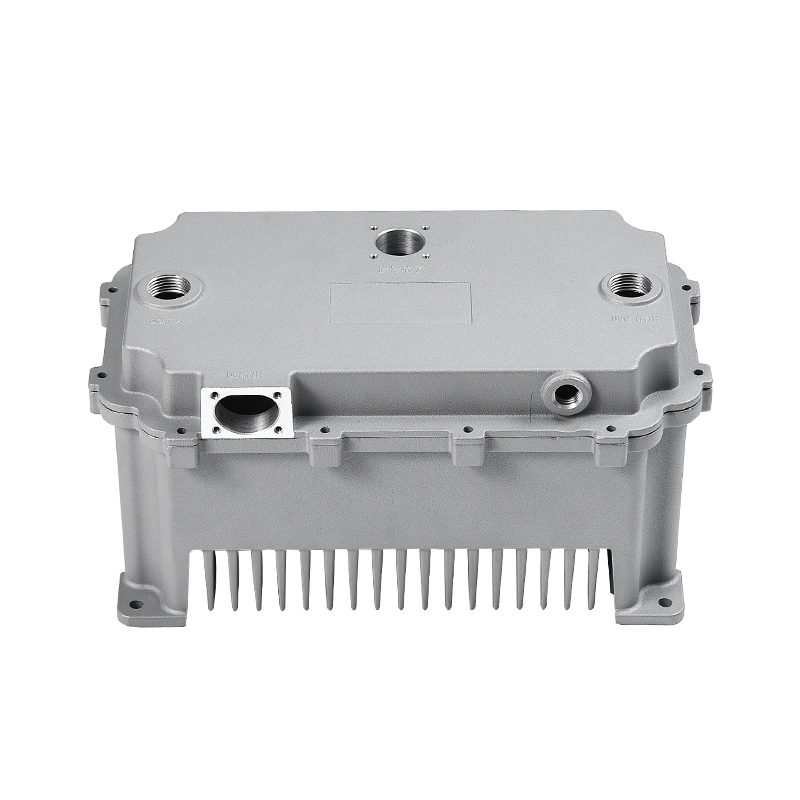
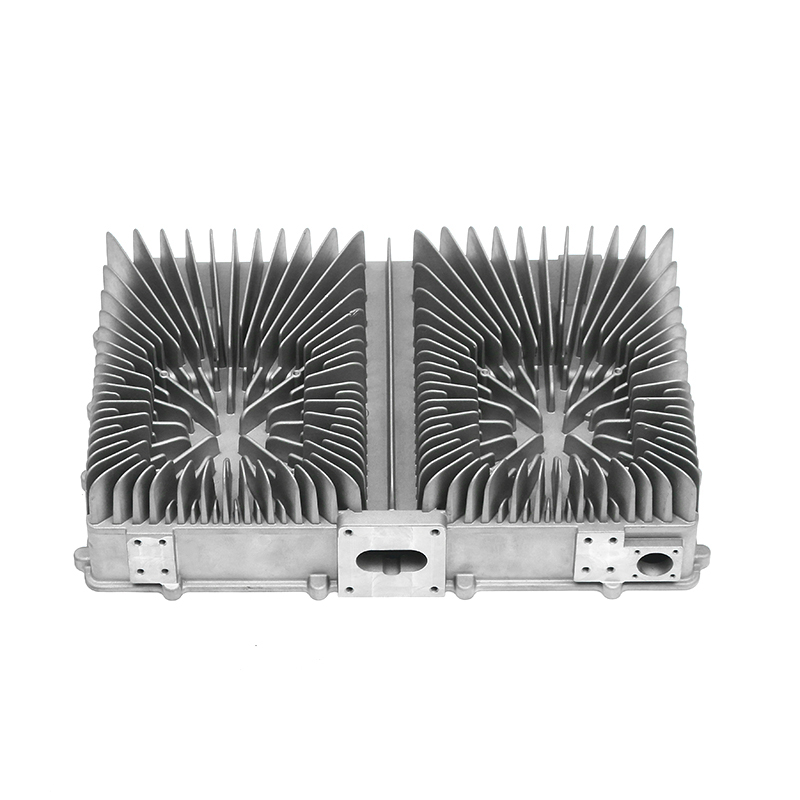
When a housing is produced as part of a complete water pump assembly, the same material and machining logic applies. You can see the range of car water pump housings we manufacture including the casting and testing steps behind each unit.
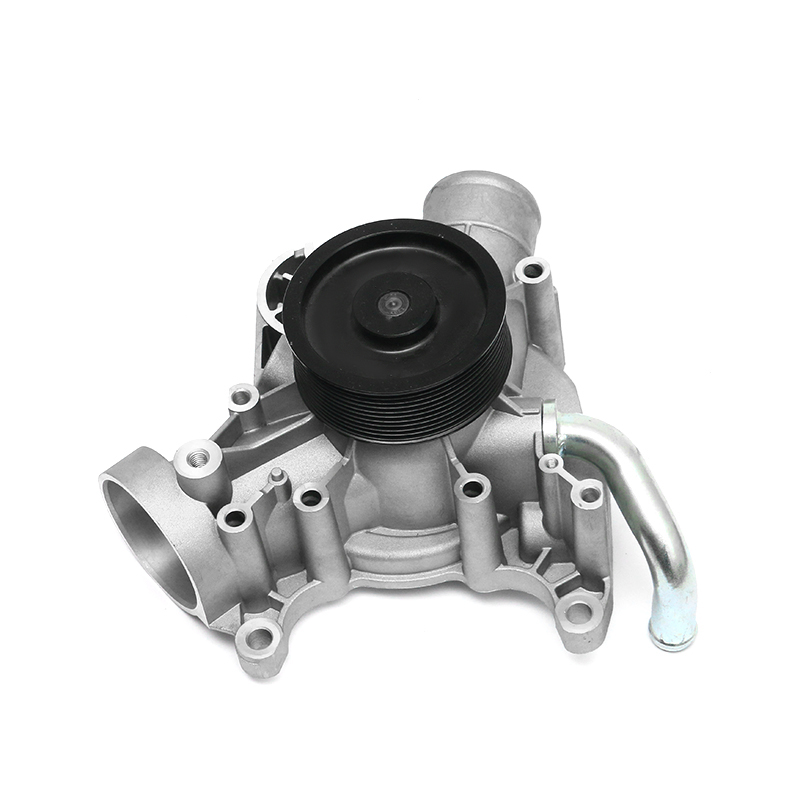 OEM/ODM Die Casting Car Water Pump Manufacturers, Suppliers, FactoryNingbo Fenda New Energy Technology Co., Ltd., is China die casting car water pump manufacturers and car water pump suppliers, our factory...View Product →
Why the Die-Casting Process Decides Housing Reliability
A water pump housing starts as a die-cast near-net shape. The die controls the wall thickness, the cooling lines, and the draft angles. If the mold design does not feed molten aluminum evenly, porosity forms in the sections that later come under pressure.
The practical consequence is that a housing can look clean on the outside and still leak through an internal micro-void. That is why pressure-tight water pump housings need controlled gate velocity, adequate overflow, and a proven shot profile.
A supplier that designs its own molds has a clear advantage in this phase. Our manufacturing history started with mold design, and the same team still works on the dies before a water pump housing enters production. The foundry uses six die-casting machines between 400 and 2,000 tonnes, which is enough for the size range of pump housings and larger coolant components.
Even a good casting can be weakened by a poor machining method, but casting remains the foundation. For a more detailed look at how wear develops at the pump level, see our technical note on improving the wear resistance of water pumps.
Machining the Surfaces That Have to Seal
Once cast, a water pump housing goes through machining centers that create the flat faces, bore, and seal seat. These are the surfaces where coolant pressure is contained. A typical housing requires controlled flatness on the engine face, a consistent bore for the shaft bearing, and a smooth groove for the radial seal.
Machining too aggressively can open pores near the surface. Machining too lightly can leave cast skin that prevents a proper gasket squeeze. The correct balance is achieved with defined datum points, stable clamping, and documented tool offsets.
In our plant, 80 high-speed machining centers process pump housings and related aluminum parts. After machining, coordinate measuring machines take routine dimensions, while an industrial CT checks internal wall thickness and porosity distribution. These steps are not laboratory extras; they are part of the quality control documentation supplied with serial production.
Key machining checks for a water pump housing
- Engine mating face flatness and finish.
- Bearing bore diameter and concentricity to the pulley hub.
- Seal groove depth and edge condition.
- Bolt hole position relative to the factory locating pins.
- Pressure-test result after final machining.
What to Verify Before You Order Water Pump Housings
Buying a water pump housing from a die-cast supplier is different from buying a standard spacer. The housing is a safety-related cooling system component, so its failure mode is not a visual defect but a slow loss of coolant that leads to engine overheating.
Before approving a supplier, review the following points in addition to price:
- Material verification. The alloy grade must support high-temperature coolant exposure and the requested corrosion protection.
- Pressure-tightness evidence. Air-leak test records tell you more than a sample housing that was never tested.
- Machining capability. Ask if the supplier controls datum references between casting and machining operations.
- Coating or surface treatment. Aluminum housings require a protective layer that can withstand engine coolant at operating temperature.
- Process quality system. An IATF 16949:2016-certified system gives traceability from melt to final inspection.
At our company, the quality system follows IATF 16949:2016, and inspection equipment includes two coordinate measuring machines, an industrial CT scanner, spectrometers, and multiple air-tightness testers. Those resources are used on every production lot, not only on initial samples.
Water Pump Housing Design Needs in Electric Vehicles
Electric powertrains changed the operating environment of the water pump. The pump no longer runs at a fixed belt ratio; it is electronically controlled and circulates coolant at variable speeds according to battery and motor temperature. This creates pressure pulsation, and the housing must remain stable under transient loads.
Electric and hybrid vehicles also add thermal management valves and multiple coolant branches. That means housings are no longer simply a pump cover. They become manifolds with several ports, which require the same porosity control as a traditional pump housing but with more complex geometries.
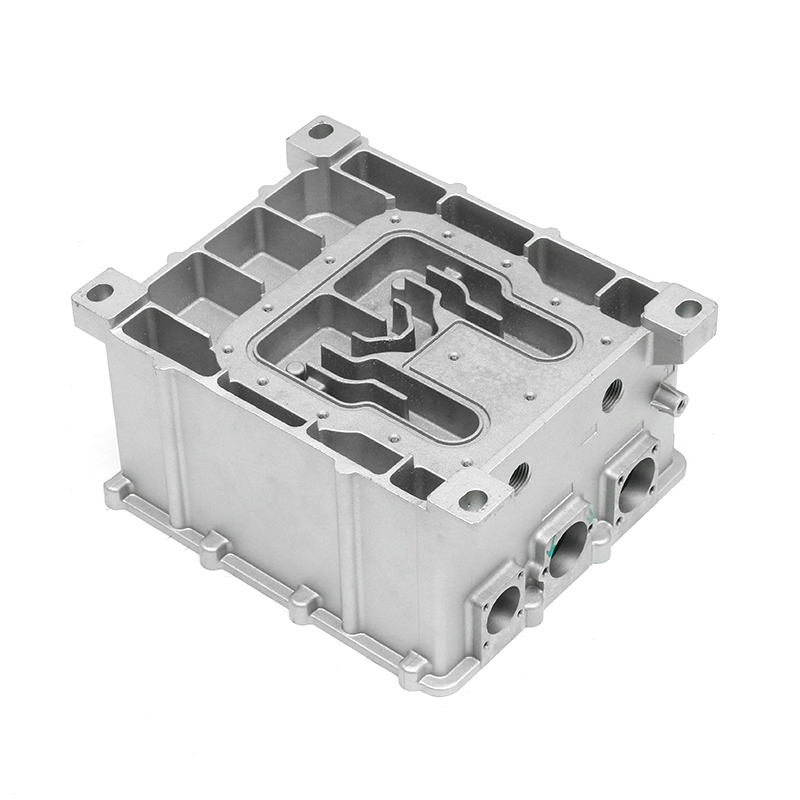
For coolant management components that go beyond a traditional water pump, the new energy electronic water cooling housings we produce show how the same casting and machining discipline is applied to larger port structures and flow channels.
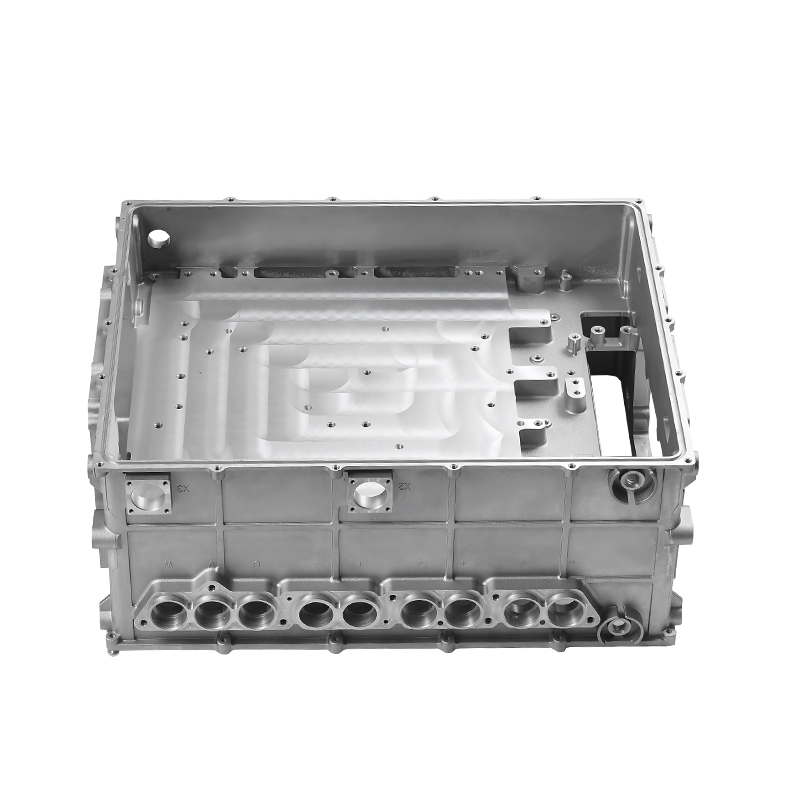 OEM/ODM Die Casting New Energy Electronically Controlled Water Cooling Series MaNingbo Fenda New Energy Technology Co., Ltd. is China New Energy Electronically Controlled Water Cooling Series die casting manufacturers...View Product →
A water pump housing does not need to be expensive, but it does need to be dense, dimensionally correct, and honestly tested. Start with the material, then look at the casting process and the quality evidence. A supplier that can show pressure-test records and machined dimension reports will save you from the kind of coolant leak that returns a week after installation.